
Thursday, July 29, 2010
Waking the Tiger
I just added Waking the Tiger to the booklist. Very interesting for those of us interested in how to bring the kind of questioning and the philosophy represented in this blog to our individual psychological/spiritual process.

Messenger
Jon shared this poem with me today. Wanted to share it with you.
Messenger
My work is loving the world.
Here the sunflowers, there the hummingbird —
equal seekers of sweetness.
Here the quickening yeast; there the blue plums.
Here the clam deep in the speckled sand.
Here the sunflowers, there the hummingbird —
equal seekers of sweetness.
Here the quickening yeast; there the blue plums.
Here the clam deep in the speckled sand.
Are my boots old? Is my coat torn?
Am I no longer young, and still not half-perfect? Let me
keep my mind on what matters,
which is my work,
Am I no longer young, and still not half-perfect? Let me
keep my mind on what matters,
which is my work,
which is mostly standing still and learning to be
astonished.
The phoebe, the delphinium.
The sheep in the pasture, and the pasture.
Which is mostly rejoicing, since all ingredients are here,
astonished.
The phoebe, the delphinium.
The sheep in the pasture, and the pasture.
Which is mostly rejoicing, since all ingredients are here,
which is gratitude, to be given a mind and a heart
and these body-clothes,
a mouth with which to give shouts of joy
to the moth and the wren, to the sleepy dug-up clam,
telling them all, over and over, how it is
that we live forever.
~ Mary Oliver ~
and these body-clothes,
a mouth with which to give shouts of joy
to the moth and the wren, to the sleepy dug-up clam,
telling them all, over and over, how it is
that we live forever.
~ Mary Oliver ~
Thursday, July 1, 2010
Gross National Happinesss
I met Steve today. He had seen the exhibit back in January/February and took some pains to find me. He gave me such good (and heartening) information. I'm very grateful.
Amongst other things, he told me about the Gross National Happiness set of principals which are currently guiding the government and people of Bhutan.
I'm just now starting to look at this amazing phenomenon and wanted to share with you all in case you missed it, as I did.
Thanks again, Steve.
Amongst other things, he told me about the Gross National Happiness set of principals which are currently guiding the government and people of Bhutan.
I'm just now starting to look at this amazing phenomenon and wanted to share with you all in case you missed it, as I did.
Thanks again, Steve.
Thursday, June 24, 2010
Stranger to Myself
In conversation with Julia this morning, I found this phrase coming out of my mouth:
I'm living a life that doesn't make sense to me, and I don't know what else to do.
I had quit the blogging several weeks back and figured I was probably done with it. This was partly because I simply have not been able to come to grips with the contradictions I seem to embody.
What I have written about here feels more genuinely me than anything I've ever tried to express. Yet, it seems that only in small ways do I live what I think I profess here. I mean, everything I do seems to be so token, so ineffective in any significant way.
Okay, so I choose to disengage from the news media, mainstream, liberal, or independent. I don't want my perception of the world tainted by these other 'interests.' But I read books. I find things on the Internet. Does this not taint my vision, as well?
I have no confidence whatsoever in the political system of this country or any other to make any kind of significant difference in mitigating our culture's presence on this planet.
At this point I don't see any signs that there is anything afoot that could create a groundswell of change from the single individual outward. Unless the oil gushing in the Gulf of Mexico is our attempt to fully hasten the further deterioration of our lifesphere.
Oh, how it hurts, in my belly, my heart, my bones! How can this have happened!
How is we are not storming someones gates somewhere, shouting: Stop, stop, stop this now! Not another drop!
Instead, I get onto the diesel-powered bus twice a day to go to work so I can buy gas for my truck and pay for my food to be shipped from God knows where to the grocery store, from whence all food comes, and to pay for the natural gas that heats my house and to pay for the electricity I use non-stop, which comes from dams that have clogged rivers for decades now, and to pay for the water I drink and wash and cook and bathe with, water that is very, very rapidly becoming the most precious of materials on this sad and ailing planet.
This ailing planet . . and I am part of its dis-ease.
Oh, God help me! How ever, did we come to such a place as this?
I call on God, and yet the best I've ever done is to turn from that yearning, that sad, sad yearning for what I already am!
Still, here I am en contradiction, living with what life still chooses to flow through me.
I'm living a life that doesn't make sense to me, and I don't know what else to do.
I had quit the blogging several weeks back and figured I was probably done with it. This was partly because I simply have not been able to come to grips with the contradictions I seem to embody.
What I have written about here feels more genuinely me than anything I've ever tried to express. Yet, it seems that only in small ways do I live what I think I profess here. I mean, everything I do seems to be so token, so ineffective in any significant way.
Okay, so I choose to disengage from the news media, mainstream, liberal, or independent. I don't want my perception of the world tainted by these other 'interests.' But I read books. I find things on the Internet. Does this not taint my vision, as well?
I have no confidence whatsoever in the political system of this country or any other to make any kind of significant difference in mitigating our culture's presence on this planet.
At this point I don't see any signs that there is anything afoot that could create a groundswell of change from the single individual outward. Unless the oil gushing in the Gulf of Mexico is our attempt to fully hasten the further deterioration of our lifesphere.
Oh, how it hurts, in my belly, my heart, my bones! How can this have happened!
How is we are not storming someones gates somewhere, shouting: Stop, stop, stop this now! Not another drop!
Instead, I get onto the diesel-powered bus twice a day to go to work so I can buy gas for my truck and pay for my food to be shipped from God knows where to the grocery store, from whence all food comes, and to pay for the natural gas that heats my house and to pay for the electricity I use non-stop, which comes from dams that have clogged rivers for decades now, and to pay for the water I drink and wash and cook and bathe with, water that is very, very rapidly becoming the most precious of materials on this sad and ailing planet.
This ailing planet . . and I am part of its dis-ease.
Oh, God help me! How ever, did we come to such a place as this?
I call on God, and yet the best I've ever done is to turn from that yearning, that sad, sad yearning for what I already am!
Still, here I am en contradiction, living with what life still chooses to flow through me.
Wednesday, May 26, 2010
Friday, May 21, 2010
Great Expectations
In Thinking Animals, Paul Shepard argues that our continued human evolution and maturation is directly related to our relationship with the other animals with whom we share this planet. In as much as our culture has evolved in the direction of limiting and/or eliminating any direct and personal relationship with the wild animals, we have also stunted our own maturation, both as individuals and as a species. (I hope I did him justice there.)
His premise makes sense to me. I've written often here about the lack of other awareness, other sensitivity in this human culture, meaning that we've become almost completely human-centric in all our day to day living, consumed by human doings continuously. What little awareness we bring moment to moment to the others who are not human with whom we share this life!
In this lack of other awareness, we become myopic to the extreme, our focus is ever increasingly inward, isolating. The aspect of this I find most disturbing is the inevitable impact this will have on coming generations of humans in our culture. I continue to look toward the new generations with the idea that a new vision will emerge, a vision which will allow us to precipitously change our direction . . . but realistically I can't conceive how that could happen--without some kind of outside-the-realm-of-human-control intervention.
I'm not a parent, other than what retro-parenting I am perennially trying to do for myself; so I don't really know what it must be like to raise a child in this world. I don't know what fears and ambitions I might have for my child. I don't know what fears and ambitions I might have for myself as a parent of a child.
The above was written 2 days ago . . . . Then I simply got stuck. I couldn't figure out exactly where I was trying to go, much less how to get there. One of the drawbacks to blogging, I think. I need the dialogue. So, thank you , Jon, for the time and the conversation yesterday.
The problem I was having was the fact that I was trying very hard to not use the word hope in the sentence, 'I continue to look toward the new generations with the idea . . . .' I didn't want to say, 'with the hope that a new vision will emerge . . . .' If you've been reading this blog since the beginning or have gone back and read earlier entries, you may remember the one called Pandora's Box.
So, you see, I didn't want to appear to be hypocritical and confess that I actually do feel hope.
The truth is I do. But I am so wary of that emotion. Yet, there it is. I don't manufacture it. It just arises within me, like sadness and joy and fear.
Think about this in the context of what I'm writing about here. I mentioned (obliquely, yes) my hope toward the 'new generation' and my more veiled hope toward the 'outside-the-realm-of-human-control intervention.' Who among us does not in all honesty have these same hopes. And why not? Most of us generally feel so stuck and so helpless in the face of the cultural juggernaut, that to not have some kind of hope would feel . . . well . . . hopeless.
But if we hang too much on hope, then are we not hanging on to that deeply ingrained cultural meme of the penultimate need for salvation?
Can you allow yourself to question hope itself? Can you, if only for a moment, allow yourself to feel no hope, without giving in to it's sinister twin hopelessness? Can you allow yourself to consider not hoping for things to be different than they actually are and instead to allow things to be just the way they are and not feel victimized by circumstance!?
I stand here in the midst of the rising waters. No floating thing is at hand. I don't know whether or not the water will continue to rise. I know that I can swim or float for a time, but that my strength and endurance will ultimately become exhausted. I don't know what will ultimately happen. I my notice that hope arises within me. My thinking mind imagines various things that could happen that would prevent me from suffering and dying. Yet that does not change my circumstance. If I do not choose to let my attention move away from the images of hoped-for salvation, I will likely miss whatever strategizing I may be capable of that may make some kind of difference. I may become so lost in the internal visions of rescue that I don't notice what may float my way as aid or comfort. I will certainly miss the simple and complete engagement with what life has given me . . . now, in this moment, which may be the last of my conscious existence.
The opposite of hope is now.
His premise makes sense to me. I've written often here about the lack of other awareness, other sensitivity in this human culture, meaning that we've become almost completely human-centric in all our day to day living, consumed by human doings continuously. What little awareness we bring moment to moment to the others who are not human with whom we share this life!
In this lack of other awareness, we become myopic to the extreme, our focus is ever increasingly inward, isolating. The aspect of this I find most disturbing is the inevitable impact this will have on coming generations of humans in our culture. I continue to look toward the new generations with the idea that a new vision will emerge, a vision which will allow us to precipitously change our direction . . . but realistically I can't conceive how that could happen--without some kind of outside-the-realm-of-human-control intervention.
I'm not a parent, other than what retro-parenting I am perennially trying to do for myself; so I don't really know what it must be like to raise a child in this world. I don't know what fears and ambitions I might have for my child. I don't know what fears and ambitions I might have for myself as a parent of a child.
The above was written 2 days ago . . . . Then I simply got stuck. I couldn't figure out exactly where I was trying to go, much less how to get there. One of the drawbacks to blogging, I think. I need the dialogue. So, thank you , Jon, for the time and the conversation yesterday.
The problem I was having was the fact that I was trying very hard to not use the word hope in the sentence, 'I continue to look toward the new generations with the idea . . . .' I didn't want to say, 'with the hope that a new vision will emerge . . . .' If you've been reading this blog since the beginning or have gone back and read earlier entries, you may remember the one called Pandora's Box.
So, you see, I didn't want to appear to be hypocritical and confess that I actually do feel hope.
The truth is I do. But I am so wary of that emotion. Yet, there it is. I don't manufacture it. It just arises within me, like sadness and joy and fear.
Think about this in the context of what I'm writing about here. I mentioned (obliquely, yes) my hope toward the 'new generation' and my more veiled hope toward the 'outside-the-realm-of-human-control intervention.' Who among us does not in all honesty have these same hopes. And why not? Most of us generally feel so stuck and so helpless in the face of the cultural juggernaut, that to not have some kind of hope would feel . . . well . . . hopeless.
But if we hang too much on hope, then are we not hanging on to that deeply ingrained cultural meme of the penultimate need for salvation?
Can you allow yourself to question hope itself? Can you, if only for a moment, allow yourself to feel no hope, without giving in to it's sinister twin hopelessness? Can you allow yourself to consider not hoping for things to be different than they actually are and instead to allow things to be just the way they are and not feel victimized by circumstance!?
I stand here in the midst of the rising waters. No floating thing is at hand. I don't know whether or not the water will continue to rise. I know that I can swim or float for a time, but that my strength and endurance will ultimately become exhausted. I don't know what will ultimately happen. I my notice that hope arises within me. My thinking mind imagines various things that could happen that would prevent me from suffering and dying. Yet that does not change my circumstance. If I do not choose to let my attention move away from the images of hoped-for salvation, I will likely miss whatever strategizing I may be capable of that may make some kind of difference. I may become so lost in the internal visions of rescue that I don't notice what may float my way as aid or comfort. I will certainly miss the simple and complete engagement with what life has given me . . . now, in this moment, which may be the last of my conscious existence.
The opposite of hope is now.
Thursday, May 6, 2010
It's a Question of Attention
I was talking with David yesterday morning about thinking and the fact that thinking can so often feel problematic. How often we wish we could stop the chatter inside our minds or least stop some of the repetitiveness of the thoughts. How often it seems as though it would be more peaceful if it were not for the incessant activity in our thinking minds. How often it seems that we just think, think, think all the time, ceaselessly, whether we really want to or not.
On the other hand, it also seems that there are even more times when we simply aren't at all aware that we are thinking; because, hey, that's what we do. Right?
How many people do you know who fully appreciate what was set in motion by Descartes' statement 'cogito ergo sum,' I think, therefore I am? Of course, Descartes didn't come up with this idea out of a vacuum. The trend in 'western' thought had been toward the supremacy of thought as the determiner that set humans apart from animals for quite some time, well before Descartes so succinctly stated what we have ever since taken completely for granted.
Two thousand years before Descartes made his proclamation, Plato had already insisted that it was the ideas of things that were ideal and real, as opposed to the corporeal, the physical, which were mere shadows of human thought. So, the meme had already thoroughly made its way into our culture by the time Descartes was born.
So, what happens when a civilization has as one of its most dominant cultural memes the 'fact' that thinking not only sets us apart from and makes us superior to all other forms of life on this planet, but that it is the very thing, and perhaps the only thing, whereby we even know that we are?
We inevitably become a culture of animals who think that what we think matters more than anything else. We become animals who live as though all otherness, anything 'outside our own heads,' is less than real. We become animals whose only relationship with anything is perpetually filtered through a skein of habitual, repetitive, purely conditioned thoughts. We become animals who have little, if any, direct relationship with anything. We become animals whose 'created reality,' from the virtual to the purely imaginal, seems more real than the physical, the corporeal, the other--including our very own bodies. We become animals whose vision of reality is completely solipsistic.
No wonder we are such a miserably unhappy group of humans! We are animals whose every waking moment is consumed by incessant distraction-seeking. We cannot stand even one naked instant in which we might really and truly feel the pain and suffering which we actually endure every moment. 'I, a stranger and afraid, in a world I never made.' We are forever trapped inside our own minds. How terribly, terribly lonely.
This is where the questioning can be very challenging but is probably most productive. You have to be willing to listen deeply within and hear what that unquestioned voice inside is continuously telling you is true.
One device for accomplishing this is to notice by your actions what you hold to be important.
However, it might actually be easier, to start with, by watching other people and noticing by their actions what they deem to be important. I'm not speaking of what people would tell you is important to them, but rather what their observable behavior seems to say is important to them. Do you notice people looking around at the 'natural' environment, pausing to take in where they are in the world at that moment. Do they easily and naturally make contact with other humans. Do they notice the birds and other wild animals around them? Are they looking up and out and taking it all in?
If these are not the things you see people attending to or 'minding' as Paul Shepard put it, then what do they seem to be doing? What are they acting out as important?
After some time of doing this. Turn your observations to your own actions. Be gentle. Don't judge. Just notice. Be lightly, even playfully curious about yourself and what your actions tell you.
If our attention is perennially on our thoughts, if we rarely, if ever, shift our attention away from our thoughts to whatever is around us, toward the others sharing the world we live on and in, then our behaviors, our actions will reflect our thinking only.
Choose often to shift you attention outward, upward, downward. Open your senses and know where you are. Don't worry about being who you are. Choose instead to be where you are. The rest will take care of itself. You don't have to think about it.
Let me know what you find out.
Most of us have seen the bumper stick, 'Question authority!' Recently I saw this one, 'Question your thoughts.' I like that one.
On the other hand, it also seems that there are even more times when we simply aren't at all aware that we are thinking; because, hey, that's what we do. Right?
How many people do you know who fully appreciate what was set in motion by Descartes' statement 'cogito ergo sum,' I think, therefore I am? Of course, Descartes didn't come up with this idea out of a vacuum. The trend in 'western' thought had been toward the supremacy of thought as the determiner that set humans apart from animals for quite some time, well before Descartes so succinctly stated what we have ever since taken completely for granted.
Two thousand years before Descartes made his proclamation, Plato had already insisted that it was the ideas of things that were ideal and real, as opposed to the corporeal, the physical, which were mere shadows of human thought. So, the meme had already thoroughly made its way into our culture by the time Descartes was born.
So, what happens when a civilization has as one of its most dominant cultural memes the 'fact' that thinking not only sets us apart from and makes us superior to all other forms of life on this planet, but that it is the very thing, and perhaps the only thing, whereby we even know that we are?
We inevitably become a culture of animals who think that what we think matters more than anything else. We become animals who live as though all otherness, anything 'outside our own heads,' is less than real. We become animals whose only relationship with anything is perpetually filtered through a skein of habitual, repetitive, purely conditioned thoughts. We become animals who have little, if any, direct relationship with anything. We become animals whose 'created reality,' from the virtual to the purely imaginal, seems more real than the physical, the corporeal, the other--including our very own bodies. We become animals whose vision of reality is completely solipsistic.
No wonder we are such a miserably unhappy group of humans! We are animals whose every waking moment is consumed by incessant distraction-seeking. We cannot stand even one naked instant in which we might really and truly feel the pain and suffering which we actually endure every moment. 'I, a stranger and afraid, in a world I never made.' We are forever trapped inside our own minds. How terribly, terribly lonely.
This is where the questioning can be very challenging but is probably most productive. You have to be willing to listen deeply within and hear what that unquestioned voice inside is continuously telling you is true.
One device for accomplishing this is to notice by your actions what you hold to be important.
However, it might actually be easier, to start with, by watching other people and noticing by their actions what they deem to be important. I'm not speaking of what people would tell you is important to them, but rather what their observable behavior seems to say is important to them. Do you notice people looking around at the 'natural' environment, pausing to take in where they are in the world at that moment. Do they easily and naturally make contact with other humans. Do they notice the birds and other wild animals around them? Are they looking up and out and taking it all in?
If these are not the things you see people attending to or 'minding' as Paul Shepard put it, then what do they seem to be doing? What are they acting out as important?
After some time of doing this. Turn your observations to your own actions. Be gentle. Don't judge. Just notice. Be lightly, even playfully curious about yourself and what your actions tell you.
If our attention is perennially on our thoughts, if we rarely, if ever, shift our attention away from our thoughts to whatever is around us, toward the others sharing the world we live on and in, then our behaviors, our actions will reflect our thinking only.
Choose often to shift you attention outward, upward, downward. Open your senses and know where you are. Don't worry about being who you are. Choose instead to be where you are. The rest will take care of itself. You don't have to think about it.
Let me know what you find out.
Most of us have seen the bumper stick, 'Question authority!' Recently I saw this one, 'Question your thoughts.' I like that one.
Friday, April 30, 2010
Illness and Disease
Because of the primacy which we give to all things human, the fact that we can even coin the phrase 'the sanctity of human life,' and our concomitant fear and loathing of death, we have no real mythological basis in this culture for the balance of life.
We cannot separate our attitudes toward illness and disease from our attitudes toward death. Our complete lack of a mythology of balance of life, allows us to destroy anything that seems to threaten human life. Of course, various civilizations within this larger civilization, of which this culture represents the overarching principle, has defined human life in ways that were convenient for the continued existence and perceived dominance of its own human group.
But that aside, overall we have given ourselves absolute permission to destroy anything that seems in contradiction to the sanctity of human life meme.
"Dying you destroyed our death, rising you restored our life. Lord Jesus, come in glory." (cf. 1 Cor 16:22). Paul of Tarsus certainly captured this meme epitomologically. He definitely drove that nail home, too, with this: "The last enemy to be destroyed is death." (1 Cor 15:26). Then we find almost this exact same phrase used by J. K. Rawlings in Harry Potter and the Deathly Hallows, "The last enemy to be conquered is death," as the inscription on the headstone of Harry's parents.
If death is the ultimate enemy, then illness and disease, death's henchmen, are certainly not our friends.
I'm not anywhere near suggesting that the suffering caused by illness and disease and the loss of beloved friends and family by death is anything other than that--suffering, pain. But I am saying that that is all that it is.
We inflict an almost unimaginable suffering on millions of other living forms on this planet every moment of every day. . . and (collectively) we don't even wince.
Earlier this week, there was a campus-wide email sent from the campus student health service alerting everyone that a child, who had recently participated an an event held on campus, had the chicken pox. It was warning everyone who might possibly have been in the vicinity of this child, who had not been vaccinated for chicken pox, to take steps to protect themselves.
So, what's odd about that? Certainly seems like good, responsible behavior on everyone's part: the reporting of the illness, the sending of the email, the heeding of the email's warnings. We can't have something like chicken pox, which we had almost eradicated in this country via the systematic immunization of our children, being allowed to spread unchecked amongst us.
Here's my point. As a mythology-bound group, we are trying to hard to keep ourselves alive!
We cannot separate our attitudes toward illness and disease from our attitudes toward death. Our complete lack of a mythology of balance of life, allows us to destroy anything that seems to threaten human life. Of course, various civilizations within this larger civilization, of which this culture represents the overarching principle, has defined human life in ways that were convenient for the continued existence and perceived dominance of its own human group.
But that aside, overall we have given ourselves absolute permission to destroy anything that seems in contradiction to the sanctity of human life meme.
"Dying you destroyed our death, rising you restored our life. Lord Jesus, come in glory." (cf. 1 Cor 16:22). Paul of Tarsus certainly captured this meme epitomologically. He definitely drove that nail home, too, with this: "The last enemy to be destroyed is death." (1 Cor 15:26). Then we find almost this exact same phrase used by J. K. Rawlings in Harry Potter and the Deathly Hallows, "The last enemy to be conquered is death," as the inscription on the headstone of Harry's parents.
If death is the ultimate enemy, then illness and disease, death's henchmen, are certainly not our friends.
I'm not anywhere near suggesting that the suffering caused by illness and disease and the loss of beloved friends and family by death is anything other than that--suffering, pain. But I am saying that that is all that it is.
We inflict an almost unimaginable suffering on millions of other living forms on this planet every moment of every day. . . and (collectively) we don't even wince.
Earlier this week, there was a campus-wide email sent from the campus student health service alerting everyone that a child, who had recently participated an an event held on campus, had the chicken pox. It was warning everyone who might possibly have been in the vicinity of this child, who had not been vaccinated for chicken pox, to take steps to protect themselves.
So, what's odd about that? Certainly seems like good, responsible behavior on everyone's part: the reporting of the illness, the sending of the email, the heeding of the email's warnings. We can't have something like chicken pox, which we had almost eradicated in this country via the systematic immunization of our children, being allowed to spread unchecked amongst us.
Here's my point. As a mythology-bound group, we are trying to hard to keep ourselves alive!
Wednesday, April 28, 2010
How to Make Sense of It All
Yesterday, as I was walking to work from the bus, I was in my head with my own personal troubles. I was not feeling very peaceful and certainly not joyful. Right behind Meany Hall there is a landscaped bank with tulip trees and small pines. The tulip trees' blossoms are all but spent now, so they don't as easily call to my inwardly turned eyes.
I was given one of those awarenesses just as I came to the stand of pines. I suddenly became aware that I was preoccupied, and that there was the possibility of a choice to me made about that. At that moment I looked out and saw the pines . . . which were laughing. I'm sure of it.
They were laughing flowers, and you know how contagious a laugh can be.
So, just as suddenly, I was out and laughing, laughing and amazing at the flowers just now coming out on the branch tips of these joyful pines. And I was amazed that for so many years I never even noticed that pines flower.
. . . and I was home. In that moment, I was home; and my personal troubles were not so troublesome anymore.
As the day went on, I became preoccupied again. This time with the stuff of my job. It was an exceptionally busy day, lots of important stuff that needed my attention.
Then about two o'clock, I decided to take the lost & found over to the HUB. It was just the next thing that needed doing. I don't usually do it. Someone else usually does it. But it seemed the right thing for me to do. And it was the time when we usually do it.
I walked out onto the broad brick path connecting Allen Library to the HUB, out from under the sheltering arcade between Allen's two wings . . . it had rained. All was damp and puddled. The smell of the rained on earth and grasses and trees, and maybe even the smell of wet birds and squirrels and insects and bacteria. I don't know what. It was that smell the rain brings even to the bricks and the people and umbrellas walking by. It was the smell . . . and I was home again. And I was laughing.
How strange that we live these lives so preoccupied, so lost in our thoughts and jumbled feelings, so unaware most of the time that we are preoccupied.
Then just as suddenly the awareness comes. We're home. Where have we been the rest of the time --most of the time.
How very strange to live this way.
And even stranger to be convinced beyond any reasonable doubt (most of the time) that what we are preoccupied with is more important than being home.
Hear this as it's given, please.
Not a place--home.
Being home.
Being the home that life is in us when we join in our awareness with all else that life expresses around us and within us.
I was given one of those awarenesses just as I came to the stand of pines. I suddenly became aware that I was preoccupied, and that there was the possibility of a choice to me made about that. At that moment I looked out and saw the pines . . . which were laughing. I'm sure of it.
They were laughing flowers, and you know how contagious a laugh can be.
So, just as suddenly, I was out and laughing, laughing and amazing at the flowers just now coming out on the branch tips of these joyful pines. And I was amazed that for so many years I never even noticed that pines flower.
. . . and I was home. In that moment, I was home; and my personal troubles were not so troublesome anymore.
As the day went on, I became preoccupied again. This time with the stuff of my job. It was an exceptionally busy day, lots of important stuff that needed my attention.
Then about two o'clock, I decided to take the lost & found over to the HUB. It was just the next thing that needed doing. I don't usually do it. Someone else usually does it. But it seemed the right thing for me to do. And it was the time when we usually do it.
I walked out onto the broad brick path connecting Allen Library to the HUB, out from under the sheltering arcade between Allen's two wings . . . it had rained. All was damp and puddled. The smell of the rained on earth and grasses and trees, and maybe even the smell of wet birds and squirrels and insects and bacteria. I don't know what. It was that smell the rain brings even to the bricks and the people and umbrellas walking by. It was the smell . . . and I was home again. And I was laughing.
How strange that we live these lives so preoccupied, so lost in our thoughts and jumbled feelings, so unaware most of the time that we are preoccupied.
Then just as suddenly the awareness comes. We're home. Where have we been the rest of the time --most of the time.
How very strange to live this way.
And even stranger to be convinced beyond any reasonable doubt (most of the time) that what we are preoccupied with is more important than being home.
Hear this as it's given, please.
Not a place--home.
Being home.
Being the home that life is in us when we join in our awareness with all else that life expresses around us and within us.
Wednesday, April 21, 2010
We Expect Too Much of Ourselves, Continued
What impact does all this human-is-all-that-matters meme have on our relationships with each other?
We seem to have a genetic proclivity to seek out otherness. Here's what David Abram says about this:
I've heard a story that in China the nandina plant (aka heavenly or sacred bamboo) was once planted outside every home, so that the head of the household could go to it to complain and share his problems. When I was a child, there were certain moods (usually a sadness or acute aloneness, I think) that could only be addressed by my climbing a tree. Have you ever found in yourself the very real feeling-need to be outside, to see the mountains, to see and feel and smell and taste the ocean, to be in the woods?
Does this not sound (and feel) intimate, when you stop and think about it?
It's a warm Summer's day. You're lying on your back in an open meadow. The grasses are tickling your bare legs and arms, as are the insects traversing your skin. The earth supports and holds you. You take in all that there is with your nose and your eyes and ears and skin. The clouds drift slowly across the sky. Insects and birds move through the space between you and those cottony forms of earth breath.
You feel, smell, hear and see all this.
Does it occur to you that what you see also sees you? What you smell also smells you? What you hear also hears you? What you touch and feel also feels you? You feel your body against the grass, against the earth. Does not the grass and the earth also feel you? Do the insects and birds also see you? Might not the clouds, which are in part vapor of your own breath, also have some awareness of you watching them float through your field of vision?
Notice how difficult it is to allow that other entities (things that exist) have awareness, too, especially those which, in our inveterate anthropomorphizing, we call inanimate (without life. Really? Without life? What incredible arrogance!).
If we don't allow ourselves to know this, to allow this reality to be real to us, then we continue to cut ourselves off from the awareness that our lives are intimate with all else with which we share this planet. We bring all these very real and biological needs to our relationships with each other, both casual and otherwise. We become incapable of real intimacy with each other because our needs are too great. We are not allowing ourselves to be nourished by the all the otherness which surrounds us and instead continue to suckle at the sore and weary breast of our emaciated version of humanity.
We seem to have a genetic proclivity to seek out otherness. Here's what David Abram says about this:
Humans are tuned for relationship. The eyes, the skin, the tongue, ears, and nostrils--all are gates where our body receives the nourishment of otherness. This landscape of shadowed voices, these feathered bodies and antlers and tumbling streams--these breathing shapes are our family, the beings with whom we are engaged, with whom we struggle and suffer and celebrate. For the largest part of our species' existence, humans have negotiated relationships with every aspect of the sensuous surroundings, exchanging possibilities with every flapping form, with each textured surface and shivering entity that we happened to focus upon. All could speak, articulating in gesture and whistle and sigh a shifting web of meanings that we felt on our skin or inhaled through our nostrils or focused with our listening ears, and to which we replied--whether with sounds, or through movements, or minute shifts of mood. The color of sky, the rush of waves--every aspect of the earthly sensuous could draw us into a relationship fed with curiosity and spiced with danger. Every sound was a voice, every scrape or blunder was a meeting--with Thunder, with Oak, with Drangonfly. And from all of these relationships our collective sensibilities were nourished.
What happens when we attempt to satisfy all our relationship needs via the human realm? What expectations do we bring to our relationships with each other--expectations we have about ourselves and expectations we have about other humans? What are the consequences of exclusive intimacy with each other and with those animals we've humanized and incorporated into our families?- David Abram, Spell of the Sensuous, Vantage Books, 1997, page ix
I've heard a story that in China the nandina plant (aka heavenly or sacred bamboo) was once planted outside every home, so that the head of the household could go to it to complain and share his problems. When I was a child, there were certain moods (usually a sadness or acute aloneness, I think) that could only be addressed by my climbing a tree. Have you ever found in yourself the very real feeling-need to be outside, to see the mountains, to see and feel and smell and taste the ocean, to be in the woods?
Does this not sound (and feel) intimate, when you stop and think about it?
It's a warm Summer's day. You're lying on your back in an open meadow. The grasses are tickling your bare legs and arms, as are the insects traversing your skin. The earth supports and holds you. You take in all that there is with your nose and your eyes and ears and skin. The clouds drift slowly across the sky. Insects and birds move through the space between you and those cottony forms of earth breath.
You feel, smell, hear and see all this.
Does it occur to you that what you see also sees you? What you smell also smells you? What you hear also hears you? What you touch and feel also feels you? You feel your body against the grass, against the earth. Does not the grass and the earth also feel you? Do the insects and birds also see you? Might not the clouds, which are in part vapor of your own breath, also have some awareness of you watching them float through your field of vision?
Notice how difficult it is to allow that other entities (things that exist) have awareness, too, especially those which, in our inveterate anthropomorphizing, we call inanimate (without life. Really? Without life? What incredible arrogance!).
If we don't allow ourselves to know this, to allow this reality to be real to us, then we continue to cut ourselves off from the awareness that our lives are intimate with all else with which we share this planet. We bring all these very real and biological needs to our relationships with each other, both casual and otherwise. We become incapable of real intimacy with each other because our needs are too great. We are not allowing ourselves to be nourished by the all the otherness which surrounds us and instead continue to suckle at the sore and weary breast of our emaciated version of humanity.
Also, and perhaps all the more, all the others which are our family here are starving for the lack of us and our intimate awareness and conscious reciprocity.
Monday, April 19, 2010
We Expect Too Much of Ourselves
Referencing where I left off in the last posting: when we started down the path of human primacy (actually, down the human-is-all-there-is path) one of the inadvertent effects has been that we expect too much of ourselves and of each other. We've come to expect that humans can (and should) provide whatever is needed for humans.
Let's look at this particular error for a moment, as though it could stand alone under our scrutiny, without having to take every other error or our kind into account. At the deepest level, our cultural mythology has told us that not only do humans represent the pinnacle of evolution on this planet, but that we, in all likelihood, represent the pinnacle of evolution in the universe. I mean, come on, after all this time have you ever actually met an extraterrestrial being or seen irrefutable evidence on television that such really and truly do exist? (I don't know the emoticon for sarcasm.)
But wait, there's more. We're not really even sure that we as physical beings are the pinnacle of anything. It's our minds, our thoughts, our ideas that represent this ultimatism. The body, after all, seems to be the great limiter of our imaginations. If only we didn't have to have one. (Look deeply now. It's not your own personal beliefs I'm calling into question here. Listen for the cultural voice silently speaking inside your own head about all this. Try to hear what that voice says about this.)
Our bodies, we know, are made up of the same stuff as the rest of the planet. Even without science we believed this to be true.
Ah, but then there's our mind, our ideas and our ideals. Oh, what we could be if only this earthy stuff didn't hold us back. If only there really weren't any rules, any limitations, anything other than our ideas to be concerned about, only the stuff inside our heads.
So, let us spend all our nows looking only at the projection of our collective thoughts on screens of various sizes. Let us only listen to the audio representations of these thoughts over speakers great and small. Let us only taste the tastes manufactured by us, the smells we've created, and feel only that which we've created as comfort. In our eyes. In our ears. On our tongues. In our noses. On our skin.
Our technology has become the realest expression of this human-centered mind. We now only interact, by and large, if not exclusively, with ourselves, with each other, and with our creations. We have, in that very real sense, become our technology. You've heard or made these comments: I need a memory upgrade. I wish I could reboot myself. I need to download my/your brain. And the beat goes on.
Go outside now (or soon, very soon).
Listen around.
Smell around.
Feel around.
Taste around.
Look around.
Allow yourself to notice that which is not human or human-related.
It's there, even in the most densely populated and built-up part of a large city: growing in the cracks of the pavement, drifting in the air between the human-produced smells and tastes, underneath, above and between the human-made sounds, close-up and beyond.
Allow the relationship that already is with all these things be felt and known by you.
Let's look at this particular error for a moment, as though it could stand alone under our scrutiny, without having to take every other error or our kind into account. At the deepest level, our cultural mythology has told us that not only do humans represent the pinnacle of evolution on this planet, but that we, in all likelihood, represent the pinnacle of evolution in the universe. I mean, come on, after all this time have you ever actually met an extraterrestrial being or seen irrefutable evidence on television that such really and truly do exist? (I don't know the emoticon for sarcasm.)
But wait, there's more. We're not really even sure that we as physical beings are the pinnacle of anything. It's our minds, our thoughts, our ideas that represent this ultimatism. The body, after all, seems to be the great limiter of our imaginations. If only we didn't have to have one. (Look deeply now. It's not your own personal beliefs I'm calling into question here. Listen for the cultural voice silently speaking inside your own head about all this. Try to hear what that voice says about this.)
Our bodies, we know, are made up of the same stuff as the rest of the planet. Even without science we believed this to be true.
Ah, but then there's our mind, our ideas and our ideals. Oh, what we could be if only this earthy stuff didn't hold us back. If only there really weren't any rules, any limitations, anything other than our ideas to be concerned about, only the stuff inside our heads.
So, let us spend all our nows looking only at the projection of our collective thoughts on screens of various sizes. Let us only listen to the audio representations of these thoughts over speakers great and small. Let us only taste the tastes manufactured by us, the smells we've created, and feel only that which we've created as comfort. In our eyes. In our ears. On our tongues. In our noses. On our skin.
Our technology has become the realest expression of this human-centered mind. We now only interact, by and large, if not exclusively, with ourselves, with each other, and with our creations. We have, in that very real sense, become our technology. You've heard or made these comments: I need a memory upgrade. I wish I could reboot myself. I need to download my/your brain. And the beat goes on.
Go outside now (or soon, very soon).
Listen around.
Smell around.
Feel around.
Taste around.
Look around.
Allow yourself to notice that which is not human or human-related.
It's there, even in the most densely populated and built-up part of a large city: growing in the cracks of the pavement, drifting in the air between the human-produced smells and tastes, underneath, above and between the human-made sounds, close-up and beyond.
Allow the relationship that already is with all these things be felt and known by you.
Wednesday, April 14, 2010
The Personal
It seems to me that one of the hallmarks of this culture of ours is this idea of the personal.
The personal.
In my private counseling practice there have been a number of occasions when I heard myself say to someone, "You know, regardless of how it feels to you, life simply isn't personal."
But let's not argue this point philosophically now, lest we get lost in an intellectual exercise (and I love a good intellectual exercise).
Instead, think about yourself. Think about the people you know, the people you see, the people you interact with. If we were somehow able to be completely honest with ourselves, how would be answer the question: what is the greatest overall preoccupation in your life?
I would aver that the most honest response would be: my life, how I'm doing. When you see someone you know, and you say hello to them, how often do you say, Hi. How you doin'? Or, How's it going? (I always assume that 'it' means my life.)
Look at the words we use so routinely: your life, my life. Consider the very fact that the only pronoun we always capitalize is 'I.'
I think this is one of those cultural memes that is very difficult for us to get outside of. My grasp of it feels very slippery to me even as I try to write this piece.
If we did not take life as personal, if we were not concerned with ourselves, our own lives, what would we be concerned with.
In The Spell of the Sensuous by David Abram, he discusses the evolution of the written alphabet, a thing we all generally take completely for granted. I mean, what are you and I doing right now if not taking a written alphabet for granted?
Now, I'm not going to do this justice, so you'll simply have to read the book: When humans, in our attempt to be able to write what we say, developed a system of symbols which were completely abstracted from the real, physical world, and only related to the sounds the human voice can make, our language became totally and completely human-centric. We were not using symbols that in any way signified any real objects or natural sounds (other than the human voice). Our written, then our oral speech became something that was only human-related. It no longer in any way, other than by abstract reference, connected us with the rest of the world.
Moreover, our ability to write our voice meant that we could also read what we (and others) wrote, but always as a monologue within ourselves. Whenever we read something, we are essentially talking to ourselves, even if we 'know' that someone else wrote what we are reading. It is our voice, inside our heads that is speaking silently what we are reading.
More than ever before, speaking, writing, and reading humans became abstract from each other and even from themselves. There were no longer any real external reference points for our lives. We were relative only to ourselves.
Prior to this universal abstraction of ourselves and the world we live in, our languages, our communications, our thoughts were not quite so personal, not all the time, not obsessively. They were relative. They related to the real, physical world in which we were inextricably embedded and at home in.
The personal.
In my private counseling practice there have been a number of occasions when I heard myself say to someone, "You know, regardless of how it feels to you, life simply isn't personal."
But let's not argue this point philosophically now, lest we get lost in an intellectual exercise (and I love a good intellectual exercise).
Instead, think about yourself. Think about the people you know, the people you see, the people you interact with. If we were somehow able to be completely honest with ourselves, how would be answer the question: what is the greatest overall preoccupation in your life?
I would aver that the most honest response would be: my life, how I'm doing. When you see someone you know, and you say hello to them, how often do you say, Hi. How you doin'? Or, How's it going? (I always assume that 'it' means my life.)
Look at the words we use so routinely: your life, my life. Consider the very fact that the only pronoun we always capitalize is 'I.'
I think this is one of those cultural memes that is very difficult for us to get outside of. My grasp of it feels very slippery to me even as I try to write this piece.
If we did not take life as personal, if we were not concerned with ourselves, our own lives, what would we be concerned with.
In The Spell of the Sensuous by David Abram, he discusses the evolution of the written alphabet, a thing we all generally take completely for granted. I mean, what are you and I doing right now if not taking a written alphabet for granted?
Now, I'm not going to do this justice, so you'll simply have to read the book: When humans, in our attempt to be able to write what we say, developed a system of symbols which were completely abstracted from the real, physical world, and only related to the sounds the human voice can make, our language became totally and completely human-centric. We were not using symbols that in any way signified any real objects or natural sounds (other than the human voice). Our written, then our oral speech became something that was only human-related. It no longer in any way, other than by abstract reference, connected us with the rest of the world.
Moreover, our ability to write our voice meant that we could also read what we (and others) wrote, but always as a monologue within ourselves. Whenever we read something, we are essentially talking to ourselves, even if we 'know' that someone else wrote what we are reading. It is our voice, inside our heads that is speaking silently what we are reading.
More than ever before, speaking, writing, and reading humans became abstract from each other and even from themselves. There were no longer any real external reference points for our lives. We were relative only to ourselves.
Prior to this universal abstraction of ourselves and the world we live in, our languages, our communications, our thoughts were not quite so personal, not all the time, not obsessively. They were relative. They related to the real, physical world in which we were inextricably embedded and at home in.
Tuesday, April 6, 2010
Posting from Mark Kelly
Mark is a co-worker here at the library, someone with whom I've had many conversations that would feel right at home in this blog. He helped with exhibit that spawned this blog; he helped to conceptualize it. Mark is assiduous in his attention to detail and in his love for getting it 'right.' In keeping with all that, he was helping someone who had inquired about the poster of various quotes that were part of the exhibit. Here is his email about his work on preparing those quotes for that person and a link to the wonderful results of his work.
I added more details to the quotations to indicate their exact source when possible. There are two major corrections. Gary Snyder's poem is widely misquoted so I journeyed to the source (we have a copy of Songs for Gaia in Special Collections). I have provided the correct wording and formatting. Also, the quotation widely attributed to Theodore Roszak about technology destroying human community is actually taken from the book, The Sibling Society, by Robert Bly.
A patron had stopped by the information desk and requested copies of the quotations about a month ago. That inspired me to compile them together on one sheet and to find their sources before sending them on. It was a task that gave me great pleasure, as it allowed me to further ponder their original contexts and their meanings. Here's an excerpt from the email I sent to the patron referring to our discussions of the quotations: "I hope you enjoy revisiting these thought-provoking quotations. We have enjoyed exploring their meanings and resonances, even though many of them are sobering and heart-breaking."
Thanks again to you, Adam, for choreographing the images and thoughts in the exhibit posters. If one has an appetite for the truth and desires real food for thought, these quotations are nutritious morsels of reality!
----------------- Mark
Thursday, April 1, 2010
Birthdays
I've made several references in this blog to time and the central relevance of this concept to our culture.
This is the time of year when many people I know celebrate (or simply have) birthdays. A couple of weeks ago I attended someone's 99th birthday party.
When I was a child, and perhaps into my young adulthood, I looked forward to the celebration of my own birthday with some excitement, wanting the recognition of friends and family and the usual gifts I could anticipate.
As I've gotten older, the idea of celebrating a birthday, mine or anyone else's, has just made less and less sense to me. Now, as I've become able to question more and more the mythology of our culture, I understand the context for why we acknowledge birthdays as we do; and it seems very much to be a tradition worthy of our doubt-full scrutiny.
To celebrate the time of one's own or someone else's birth, the historic fact of a person's being born, really seems to serve the ulterior purpose of perpetually placing our lives in time. I, you, we were born at a certain point in time which gives our lives a time-determined trajectory--counting the years, moving ever forward in age (time), ever moving away from birth toward death. As I get older (have more birthdays under my belt), I become more and more aware that there will also be a death date.
Now there's certainly nothing wrong with that...if ours were a culture that also celebrated death.
What to celebrate, then, that would not keep us locked into the march of time?
I had an interesting experience the other day while walking through Lincoln Park with my dog. We were just passing under a canopy of firs and cedars when quite suddenly a big flock of crows descended into the branches only 15 or 20 feet above our heads, cawing loudly and making all kinds of wonderful crow ruckus. It felt very personal to me. I didn't think about it. I just felt intentionally included in this amazing event. I felt invited. My heart jumped up and down. I laughed out loud...like the crow I was at that moment.
Some days later we found ourselves walking along the same stretch of path. I remembered what we had experienced there. It was different, though. I wasn't remembering it in terms of time. It wasn't important when it happened, just that it happened. I was remembering it, celebrating it, in terms of the place where it occurred.
What are the ways we can challenge the hold time has over our lives? We can allow ourselves to begin to remember, celebrate the place where something happened that changed us... not the time when it occurred.
Imagine someone asking you one day how old you are...
and you honestly don't know.
This is the time of year when many people I know celebrate (or simply have) birthdays. A couple of weeks ago I attended someone's 99th birthday party.
When I was a child, and perhaps into my young adulthood, I looked forward to the celebration of my own birthday with some excitement, wanting the recognition of friends and family and the usual gifts I could anticipate.
As I've gotten older, the idea of celebrating a birthday, mine or anyone else's, has just made less and less sense to me. Now, as I've become able to question more and more the mythology of our culture, I understand the context for why we acknowledge birthdays as we do; and it seems very much to be a tradition worthy of our doubt-full scrutiny.
To celebrate the time of one's own or someone else's birth, the historic fact of a person's being born, really seems to serve the ulterior purpose of perpetually placing our lives in time. I, you, we were born at a certain point in time which gives our lives a time-determined trajectory--counting the years, moving ever forward in age (time), ever moving away from birth toward death. As I get older (have more birthdays under my belt), I become more and more aware that there will also be a death date.
Now there's certainly nothing wrong with that...if ours were a culture that also celebrated death.
What to celebrate, then, that would not keep us locked into the march of time?
I had an interesting experience the other day while walking through Lincoln Park with my dog. We were just passing under a canopy of firs and cedars when quite suddenly a big flock of crows descended into the branches only 15 or 20 feet above our heads, cawing loudly and making all kinds of wonderful crow ruckus. It felt very personal to me. I didn't think about it. I just felt intentionally included in this amazing event. I felt invited. My heart jumped up and down. I laughed out loud...like the crow I was at that moment.
Some days later we found ourselves walking along the same stretch of path. I remembered what we had experienced there. It was different, though. I wasn't remembering it in terms of time. It wasn't important when it happened, just that it happened. I was remembering it, celebrating it, in terms of the place where it occurred.
What are the ways we can challenge the hold time has over our lives? We can allow ourselves to begin to remember, celebrate the place where something happened that changed us... not the time when it occurred.
Imagine someone asking you one day how old you are...
and you honestly don't know.
Tuesday, March 30, 2010
About Music
Over the weekend I was thinking about music.
Music has always been a huge part of my life. Still is. For a short time in my undergraduate years I was a music major, but I couldn't sustain it because it was way too competitive for me. Most of those other music majoring students had been reared on classical music and had studied formally for most of their childhoods.
I simply loved music. My music background was in the Southern Baptist church and the old time gospel songs my parents sang as we traveled by car from one Army post to the next. I learned to read music by attending a shaped note training in a country Assembly of God church in rural, southern Alabama. (Isn't that a clincher? Southern Alabama. What a double dose!)
I wonder how music is experienced in your life. It seems to be pretty important to us culturally.
I don't think most people walking around with earphones are listening to talking. What's a movie or a television program without a musical soundtrack. I mean, really, how would you even know what to feel when watching a movie without the music?
I often listen to music over an Internet radio station when I'm in my office at work. I listen to CDs when I'm in my truck. People pay big bucks to go to concerts to hear live music. People sing in choirs and bands and staged musicals.
Many of us sing along with whatever music we're listening to. Sometimes, maybe, we just sing on our own because we simply want to or we need to or we just can't help it.
Now that's the piece I've been coming to here.
Think about music for moment. Just let your mind go where it wants to when it contemplates music.
Now think about music without any reference in your thinking to performance.
Have you ever seen a child, sitting by herself and playing and making up a song as she sits there or as she dances around or walks? When was the last time you did that? Have you ever done that?
Like me, you probably know someone who says they can't sing. What does this mean, they can't sing? If you take the time and care to inquire about what this person means, it probably includes things about how they think they sound or what they've been told about how they sound. Perhaps they would say they can't carry a tune. You know, stuff like that. We've all heard it. Maybe some of us have been the ones to say it.
Well all of that implies that we have a notion of how singing is supposed to be, how it is supposed to sound, and that whatever we are doing is not the way it's supposed to be done. Says who?
Before music was co-opted by the culture of which we are a part, I suspect it played a different role in people's lives. What was music before it became something primarily either performed or listened to? What was music like when there was more spontaneity in it as an expression?
Music has always been a huge part of my life. Still is. For a short time in my undergraduate years I was a music major, but I couldn't sustain it because it was way too competitive for me. Most of those other music majoring students had been reared on classical music and had studied formally for most of their childhoods.
I simply loved music. My music background was in the Southern Baptist church and the old time gospel songs my parents sang as we traveled by car from one Army post to the next. I learned to read music by attending a shaped note training in a country Assembly of God church in rural, southern Alabama. (Isn't that a clincher? Southern Alabama. What a double dose!)
I wonder how music is experienced in your life. It seems to be pretty important to us culturally.
I don't think most people walking around with earphones are listening to talking. What's a movie or a television program without a musical soundtrack. I mean, really, how would you even know what to feel when watching a movie without the music?
I often listen to music over an Internet radio station when I'm in my office at work. I listen to CDs when I'm in my truck. People pay big bucks to go to concerts to hear live music. People sing in choirs and bands and staged musicals.
Many of us sing along with whatever music we're listening to. Sometimes, maybe, we just sing on our own because we simply want to or we need to or we just can't help it.
Now that's the piece I've been coming to here.
Think about music for moment. Just let your mind go where it wants to when it contemplates music.
Now think about music without any reference in your thinking to performance.
Have you ever seen a child, sitting by herself and playing and making up a song as she sits there or as she dances around or walks? When was the last time you did that? Have you ever done that?
Like me, you probably know someone who says they can't sing. What does this mean, they can't sing? If you take the time and care to inquire about what this person means, it probably includes things about how they think they sound or what they've been told about how they sound. Perhaps they would say they can't carry a tune. You know, stuff like that. We've all heard it. Maybe some of us have been the ones to say it.
Well all of that implies that we have a notion of how singing is supposed to be, how it is supposed to sound, and that whatever we are doing is not the way it's supposed to be done. Says who?
Before music was co-opted by the culture of which we are a part, I suspect it played a different role in people's lives. What was music before it became something primarily either performed or listened to? What was music like when there was more spontaneity in it as an expression?
I'm Not Gone...
just overly busy. Don't despair (or exult, if that's what you feel) at the lack of new postings here. I'll be back soon.
Tuesday, March 23, 2010
More About the Dark
Many years ago I was camping with a friend on BLM land in New Mexico, near Taos. We were up on a slope, miles from the nearest road and Ojo Caliente Mineral Springs; though we could see the road from our campsite. Every evening Andrew and I would go to bed to the sound of a coyote pack celebrating the ending of their day and awaken every morning to their opening salute to the not yet visible sun, as though their yelping was required to bring the sun forth.
At that time there wasn't a whole lot of traffic on this roadway, especially after the dark had set in, making it all the more dramatic when a vehicle would come into view, with it's beams of light sweeping across the darkened terrain. Light pollution, I called it then, somewhat puritanically. Now I'm not sure that I was simply being a purist in calling it that.
Light, like air and noise pollutants, is something we inflict on the others with whom we share this wonderful biosphere. Nor do we stop to measure how our fear of dark or addiction to light has impacted life here and our own participation in it.
Have you reflected on your own relationship to darkness? Are you a lover of the light to the detriment of loving the dark?
We even fear the symbolic dark, the darkness of depression and the deep inward-reaching that comes to all of us from time to time and which, to some extent, is an appropriate response to what it is we experience (consciously or not) as our home continues to deteriorate. Culturally we fear and hate this darkness, and we run to the pharmaceuticals for our relief and as our hope for salvation.
In Christianism, Christ is said to have brought the light. Buddhism considers the most heightened state of human possibility is enlightenment.
I don't want to belabor this. I just want to challenge you to reexamine your own relationship to darkness. See the cultural assumptions you do not question about this.
At that time there wasn't a whole lot of traffic on this roadway, especially after the dark had set in, making it all the more dramatic when a vehicle would come into view, with it's beams of light sweeping across the darkened terrain. Light pollution, I called it then, somewhat puritanically. Now I'm not sure that I was simply being a purist in calling it that.
Light, like air and noise pollutants, is something we inflict on the others with whom we share this wonderful biosphere. Nor do we stop to measure how our fear of dark or addiction to light has impacted life here and our own participation in it.
Have you reflected on your own relationship to darkness? Are you a lover of the light to the detriment of loving the dark?
We even fear the symbolic dark, the darkness of depression and the deep inward-reaching that comes to all of us from time to time and which, to some extent, is an appropriate response to what it is we experience (consciously or not) as our home continues to deteriorate. Culturally we fear and hate this darkness, and we run to the pharmaceuticals for our relief and as our hope for salvation.
In Christianism, Christ is said to have brought the light. Buddhism considers the most heightened state of human possibility is enlightenment.
I don't want to belabor this. I just want to challenge you to reexamine your own relationship to darkness. See the cultural assumptions you do not question about this.
Monday, March 22, 2010
Too Much Light
I live in the city now. Until a few months ago I was living in the suburbs. One of the differences I've noticed (other than the fact that I no longer live in a relatively old forest) is that there are a lot more streetlights in the city, and a lot more people who leave porch/outside lights on all night.
All fear issues aside for the moment, try to imagine that as a culture we valued darkness, that we actually cultivated darkness into our lives. What if we learned how to move in the darkness using our limited sight and hour heightened hearing, smelling, and feeling? What if darkness were not considered 'bad' in the same way that light is considered 'good?' What if we simply didn't use as many lights at night as we do?
When I lived in the suburbs there was a route I routinely took on my early morning walk with my dogs. Here in Seattle, we have long winter nights; so my early morning walks were more often than not in the dark. We would walk down the streetlight lit, paved street for a block or two, then we'd walk through a newish cemetery, and finally on this short connecting path through some woods to a neighborhood park, and finally back to the lighted street. I would take a flashlight so I could effectively pick up the dog poop, but I preferred the rest of the walk to be in the dark. I found I could pretty easily make my way along even the connecting path through the woods without any more light than the moon and stars provided.
When I moved to my new residence in the city, one of the first things I found myself doing (I literally noticed that I was doing this), I figured out how to move through the new house in the dark: how to get to the bathroom, how to get upstairs (the stairs are pretty dark in this house). I clearly was feeling that this new place to live was going to be more 'mine' once I knew how to move around in it in the dark.
Think about it. Look within. Question your own beliefs about light and dark.
All fear issues aside for the moment, try to imagine that as a culture we valued darkness, that we actually cultivated darkness into our lives. What if we learned how to move in the darkness using our limited sight and hour heightened hearing, smelling, and feeling? What if darkness were not considered 'bad' in the same way that light is considered 'good?' What if we simply didn't use as many lights at night as we do?
When I lived in the suburbs there was a route I routinely took on my early morning walk with my dogs. Here in Seattle, we have long winter nights; so my early morning walks were more often than not in the dark. We would walk down the streetlight lit, paved street for a block or two, then we'd walk through a newish cemetery, and finally on this short connecting path through some woods to a neighborhood park, and finally back to the lighted street. I would take a flashlight so I could effectively pick up the dog poop, but I preferred the rest of the walk to be in the dark. I found I could pretty easily make my way along even the connecting path through the woods without any more light than the moon and stars provided.
When I moved to my new residence in the city, one of the first things I found myself doing (I literally noticed that I was doing this), I figured out how to move through the new house in the dark: how to get to the bathroom, how to get upstairs (the stairs are pretty dark in this house). I clearly was feeling that this new place to live was going to be more 'mine' once I knew how to move around in it in the dark.
Think about it. Look within. Question your own beliefs about light and dark.
Friday, March 19, 2010
Now
In the last entry I stated that, in seeking some experience of release from time, some people pursue a discipline of being in the now. I suspect that many of you reading this may know from your own experience what I'm talking about.
For the sake of this discussion, let's say that there are and have been 2 kinds of human cultures throughout our existence as a cultural species: cultures of time and cultures of place. At length I've spoken about our culture, a culture whose cornerstone is that concept we call history: we (our civilization) has a clear and demonstrable beginning point, followed by a series of events, leading toward some indeterminate, but inevitable end (You can't have a beginning without an end. One is a priori of the other.).
Because our culture (and thus ourselves, to the extent we have not questioned the beliefs and assumptions held deeply within our own psyches) is defined by time (see yesterday's posting), we are ever and always either moving away from the past or toward the future, both of which do not really exist. They are simply concepts we accept as reality. The past is some other now brought into the now via memory. The future does not and can never exist, it is a series of thoughts and emotions about what might be. There is, in fact, always and only now.
Inevitably, then, our culture can only acknowledge and experience now as a series of nows leading from one to the next, so that experientially we are never now. We're never here (now), because we're always either coming from someplace or going to someplace.
Oops, I gave myself away. Look at how easy it was in the last paragraph for me to move from now to here. I wonder if it was just a seamless for you, the reader, to go right along with me. Note how easy it is for us to equate time with place: I was there then; I'm here now; I'll be someplace else later. What we've done as a culture is re-place place with time. What is a priori there?
Place always and everywhere simply is. Time never is: what time is it? 8:30, I mean, 8:31, no, 8:32. Someone invented these minute time measurers, like the atomic clock to try and bridge this cultural paradox of time taking precedence over place. Perhaps if we can get our measurement of time to be smaller and smaller and smaller, we may finally be able to get here the instant something simply is (read now).
If you are now, you are here. Now and here are the same. Being a people of place rather than a people of time means that one is probably in that experiential state of being congruous with all that is around you. I am now and so is everything else. There isn't anything else. This is it. Even my thoughts about the past and the future are now. I am inseparable from now, which means I am inseparable from place, from here.
We (our culture) cannot have a true relationship with place (where we are) because we cannot ever be here. If we cannot have a relationship with here and now, how can we ever know that experience of belonging? We are always getting somewhere, someplace, sometime (not very precise, is it?). We can never be home. No wonder our religions must include the existence of some place out of time beyond when our time is done (death) so we can finally be home.
If I can never know that this is home, why would I care about it. I'm just stuck here for a time until I can get to where I'm really going...over yonder. This place doesn't really matter because it's not real to me. It is only a means to get me over there.
For the sake of this discussion, let's say that there are and have been 2 kinds of human cultures throughout our existence as a cultural species: cultures of time and cultures of place. At length I've spoken about our culture, a culture whose cornerstone is that concept we call history: we (our civilization) has a clear and demonstrable beginning point, followed by a series of events, leading toward some indeterminate, but inevitable end (You can't have a beginning without an end. One is a priori of the other.).
Because our culture (and thus ourselves, to the extent we have not questioned the beliefs and assumptions held deeply within our own psyches) is defined by time (see yesterday's posting), we are ever and always either moving away from the past or toward the future, both of which do not really exist. They are simply concepts we accept as reality. The past is some other now brought into the now via memory. The future does not and can never exist, it is a series of thoughts and emotions about what might be. There is, in fact, always and only now.
Inevitably, then, our culture can only acknowledge and experience now as a series of nows leading from one to the next, so that experientially we are never now. We're never here (now), because we're always either coming from someplace or going to someplace.
Oops, I gave myself away. Look at how easy it was in the last paragraph for me to move from now to here. I wonder if it was just a seamless for you, the reader, to go right along with me. Note how easy it is for us to equate time with place: I was there then; I'm here now; I'll be someplace else later. What we've done as a culture is re-place place with time. What is a priori there?
Place always and everywhere simply is. Time never is: what time is it? 8:30, I mean, 8:31, no, 8:32. Someone invented these minute time measurers, like the atomic clock to try and bridge this cultural paradox of time taking precedence over place. Perhaps if we can get our measurement of time to be smaller and smaller and smaller, we may finally be able to get here the instant something simply is (read now).
If you are now, you are here. Now and here are the same. Being a people of place rather than a people of time means that one is probably in that experiential state of being congruous with all that is around you. I am now and so is everything else. There isn't anything else. This is it. Even my thoughts about the past and the future are now. I am inseparable from now, which means I am inseparable from place, from here.
We (our culture) cannot have a true relationship with place (where we are) because we cannot ever be here. If we cannot have a relationship with here and now, how can we ever know that experience of belonging? We are always getting somewhere, someplace, sometime (not very precise, is it?). We can never be home. No wonder our religions must include the existence of some place out of time beyond when our time is done (death) so we can finally be home.
If I can never know that this is home, why would I care about it. I'm just stuck here for a time until I can get to where I'm really going...over yonder. This place doesn't really matter because it's not real to me. It is only a means to get me over there.
Thursday, March 18, 2010
Time Masters
In this blog I've made any number of references to ours being a culture based on time rather than place. With last weekend's annual event of moving to Daylight Savings Time, I've been reflecting on this all the more.
All justifications for making this change twice a year aside, what cultural memes are at work in this phenomenon? On the one hand we live as though time is everything, the great determiner: we're always running out of time, for us dying is the end of time, we spend time, we save time, we budget our time, we give our time. We have different kinds of time: good times, bad times, wasted time, quality time, vacation time, work time, leisure time down time. We have time commitments, and we have free time. Time is personal as well as shared: my time, your time, our time. What about the fact that when people are in prison we say they are serving time.
On the other hand, we so often seem to long for a sense of freedom from time. We speak of certain experiences or certain events as having a timeless quality; and we mean this as a positive attribute. We even describe people sometimes as having that timeless quality. We seek those experiences of leisure when we 'don't have to worry about time.' We sometimes say we 'lost all track of time' which can be a good experience or one for which we feel guilty. Some people seek that sense of timelessness in the experience of intense presence when meditating or in disciplining themselves to be present in the now. These are felt as moments when time does not seem to exist. We've even created a belief in a life after this life in which time, in fact, does no longer exists. Eternity, we call it.
With the government declaring that we will now change the time so that (essentially) the sun rises later and sets later, we are behaving as though we are saving some of the sun for the time when we want it rather than taking it when it's given. What meme is at play here? Are we in some symbolic way saying that the sun is under our control.
Is it also not the fact those who feel they are in power are telling us this: that even though we feel inexorably that time is in control of our lives, that it is actually they who powerful enough to determine when the sun when rise and set and powerful enough to control time, which in turn controls our lives.
All justifications for making this change twice a year aside, what cultural memes are at work in this phenomenon? On the one hand we live as though time is everything, the great determiner: we're always running out of time, for us dying is the end of time, we spend time, we save time, we budget our time, we give our time. We have different kinds of time: good times, bad times, wasted time, quality time, vacation time, work time, leisure time down time. We have time commitments, and we have free time. Time is personal as well as shared: my time, your time, our time. What about the fact that when people are in prison we say they are serving time.
On the other hand, we so often seem to long for a sense of freedom from time. We speak of certain experiences or certain events as having a timeless quality; and we mean this as a positive attribute. We even describe people sometimes as having that timeless quality. We seek those experiences of leisure when we 'don't have to worry about time.' We sometimes say we 'lost all track of time' which can be a good experience or one for which we feel guilty. Some people seek that sense of timelessness in the experience of intense presence when meditating or in disciplining themselves to be present in the now. These are felt as moments when time does not seem to exist. We've even created a belief in a life after this life in which time, in fact, does no longer exists. Eternity, we call it.
With the government declaring that we will now change the time so that (essentially) the sun rises later and sets later, we are behaving as though we are saving some of the sun for the time when we want it rather than taking it when it's given. What meme is at play here? Are we in some symbolic way saying that the sun is under our control.
Is it also not the fact those who feel they are in power are telling us this: that even though we feel inexorably that time is in control of our lives, that it is actually they who powerful enough to determine when the sun when rise and set and powerful enough to control time, which in turn controls our lives.
Friday, March 12, 2010
Picking Up on Where I Left Off Yesterday
Back to the question, 'Okay. So what do I do [after all the questioning and raising of doubts]?'
The question itself betrays how steeped we are in our cultural assumptions. Because our culture evolved as a culture of time (read history) rather than a culture of place, we have evolved as a group of human doings as opposed to a culture of human beings. The emphasis in our world view has been chronological: this happened, then is happened, then this, etc. So, as time become fuller and became more completely the lens through which we viewed life and our selves, life for us became a series of doings. Our identities became enmeshed with what we were able to do or not do (a differently-abled person is thus considered dis-abled, identified by what they are unable to do). Our culture became hierarchical: at the bottom were those who had the most constraints on their doings, while those on top had the least constraints on what they could do. Above that was God who could (and did) do everything and ultimately would undo all our doings when we died.
We so couldn't stand the notion of being undone by death (which also meant our unbeing), that we did two things: we created a life that comes after this one ends, a life in which all doings were done and in which we were finally able to just be); and we created history: historic events and heroes. If, in our lives, we were able to insinuate ourselves into history, be part of an historic event, be heroic enough in our doings as to be remembered by others, we were able to escape (in our minds, at least) the notion that God could undo us at death.
When we ask a question like, 'Now that I know all this, what do I do next,' we're falling prey to the belief that life needs us to do something, to take action, to make a mark, to make a difference.
People who did not create cultures based on time, but rather, built their lives based on place, seem to have the reality that the appropriate action, the action that is needed, evolves from their beingness, their being part of the place in which they and their culture exists. When we ask, What do we need to do, we're not trusting that the questioning which we are about, the questioning which washes away layer upon layer of wrong assumptions and divisions between our own lives and the life that is the planet upon which we live and upon which we are reliant for our very existence. We are not trusting that this process will, in and of itself, beget the appropriate doing, if doing is what is needed.
My word to you is this, trust the doubt.
The question itself betrays how steeped we are in our cultural assumptions. Because our culture evolved as a culture of time (read history) rather than a culture of place, we have evolved as a group of human doings as opposed to a culture of human beings. The emphasis in our world view has been chronological: this happened, then is happened, then this, etc. So, as time become fuller and became more completely the lens through which we viewed life and our selves, life for us became a series of doings. Our identities became enmeshed with what we were able to do or not do (a differently-abled person is thus considered dis-abled, identified by what they are unable to do). Our culture became hierarchical: at the bottom were those who had the most constraints on their doings, while those on top had the least constraints on what they could do. Above that was God who could (and did) do everything and ultimately would undo all our doings when we died.
We so couldn't stand the notion of being undone by death (which also meant our unbeing), that we did two things: we created a life that comes after this one ends, a life in which all doings were done and in which we were finally able to just be); and we created history: historic events and heroes. If, in our lives, we were able to insinuate ourselves into history, be part of an historic event, be heroic enough in our doings as to be remembered by others, we were able to escape (in our minds, at least) the notion that God could undo us at death.
When we ask a question like, 'Now that I know all this, what do I do next,' we're falling prey to the belief that life needs us to do something, to take action, to make a mark, to make a difference.
People who did not create cultures based on time, but rather, built their lives based on place, seem to have the reality that the appropriate action, the action that is needed, evolves from their beingness, their being part of the place in which they and their culture exists. When we ask, What do we need to do, we're not trusting that the questioning which we are about, the questioning which washes away layer upon layer of wrong assumptions and divisions between our own lives and the life that is the planet upon which we live and upon which we are reliant for our very existence. We are not trusting that this process will, in and of itself, beget the appropriate doing, if doing is what is needed.
My word to you is this, trust the doubt.
Thursday, March 11, 2010
Deepening the Doubt
THIS IS A LONG ONE.
Twice this week I was able to have pretty lengthy conversations about this stuff with a couple of people (I am deeply indebted, Jon and Lianne!). Those conversations seem to make it both easier and harder to post something today. Easier, because the thoughts are fresh in my mind. Harder because I feel like I've already said what I have to say, and because it was a conversation [. . . electric charge is made to flow along a closed path (a circuit), usually to perform some useful task. - Wikipedia].
When people are engaged with the questions, they generally come to the point where they say, "Okay. So, what do I do." And the question has frustrated me. Frustrated me because I feel like I'm supposed to have an answer and because I've always had the same question myself.
It came to me this week, in both of these conversations (do you have experience of sometimes not really knowing what you know and what you think until you hear yourself saying it out loud?): the only thing to do is to keep asking the questions.
The depth of our cultural assumptions is so much more than most of us ever realize until we start down the path of doubt. The depth to which we assume that things are here for us is beyond profound (profane). Here's the example I used with Lianne yesterday. When you stand at your kitchen sink and wash your dishes, what is in your mind about the water? Is there anything in your mind about the water? Do you just assume that you can reach over, turn on the tap and the water will flow, to whatever extent you want it or need it? Do you only really think about it if it doesn't behave as you expect: perhaps the pressure behind the water is less than usual, perhaps there is some unusual coloration in the water or an odor you didn't anticipate, maybe it's not as hot as or hotter than you anticipated. Maybe you think about how much you're using because the water bill was higher than usual last month or your budget has gotten tighter.
Regardless, notice that all those questions are fraught with assumptions, assumptions about you and your expectations of the water.
What if instead you were being thoughtful about the water, just like you would be thoughtful of a friend or a housemate or partner or your pet or the person who delivers the bottled water to your house or apartment? If being thoughtful about those others means that you wonder how they are doing, do they have needs you can help with, if it means extending your feelings, your instincts, your intuitions toward that other to make a connection, to bring them into your own feeling space as if they are you in some way, a part of you and you part of them . . . in some way . . .then what does being thoughtful about the water mean?
In my mind it means thinking of, feeling about, treating the water as a living other, no less an other than the person who delivers the bottled water to your door.
We know that when someone comes to us, enters the space we are in, that they are coming to us from some otherwhere, from some other experiences that probably have nothing directly to do with us. They had interactions that shaped how they are feeling when they enter the space we are in, they are having internal experiences right then and there that may have nothing at all to do with us but which, nonetheless, influence the interaction we are having right now. We know the same is true about us, and we extend this realization to the other, allowing for their otherness, which includes all the above and more . . much, much more.
This we call empathy. This we call caring. (This, by the way, seems to be all but lacking in most interactions I witness these days; but I assume you all are different than that.)
What would it mean to extend our recognition of otherness to the water we are using to wash our dishes? Do you own the water? Yes, you are in all likelihood paying to have it come out of your tap. But do you own it? Is it yours? Where was it before it came into the pipes in your dwelling and out the tap into your sink, onto your hands and your dishes. Were there others who were at some previous point engaged with that water, too? Some fish, perhaps, or an insect, a bird, a raccoon, an amoeba, a bacterium.
And what of the water itself? Is there an otherness there, too. At what point do we consider, what does the water want? Is there a livingness, a spirit that belongs to the water. Is there a moment, when you think, 'Thank you, water, for coming here to help me wash these dishes just now.'
At the point (and it may just have occurred) you find yourself smiling and thinking, this is silly or, at the very least it's a quaint idea, some alternative spirituality . . .that is what points to your unquestioned assumptions about the world, the assumptions our culture has given to you and which, up to this point, you do not doubt.
Twice this week I was able to have pretty lengthy conversations about this stuff with a couple of people (I am deeply indebted, Jon and Lianne!). Those conversations seem to make it both easier and harder to post something today. Easier, because the thoughts are fresh in my mind. Harder because I feel like I've already said what I have to say, and because it was a conversation [. . . electric charge is made to flow along a closed path (a circuit), usually to perform some useful task. - Wikipedia].
When people are engaged with the questions, they generally come to the point where they say, "Okay. So, what do I do." And the question has frustrated me. Frustrated me because I feel like I'm supposed to have an answer and because I've always had the same question myself.
It came to me this week, in both of these conversations (do you have experience of sometimes not really knowing what you know and what you think until you hear yourself saying it out loud?): the only thing to do is to keep asking the questions.
The depth of our cultural assumptions is so much more than most of us ever realize until we start down the path of doubt. The depth to which we assume that things are here for us is beyond profound (profane). Here's the example I used with Lianne yesterday. When you stand at your kitchen sink and wash your dishes, what is in your mind about the water? Is there anything in your mind about the water? Do you just assume that you can reach over, turn on the tap and the water will flow, to whatever extent you want it or need it? Do you only really think about it if it doesn't behave as you expect: perhaps the pressure behind the water is less than usual, perhaps there is some unusual coloration in the water or an odor you didn't anticipate, maybe it's not as hot as or hotter than you anticipated. Maybe you think about how much you're using because the water bill was higher than usual last month or your budget has gotten tighter.
Regardless, notice that all those questions are fraught with assumptions, assumptions about you and your expectations of the water.
What if instead you were being thoughtful about the water, just like you would be thoughtful of a friend or a housemate or partner or your pet or the person who delivers the bottled water to your house or apartment? If being thoughtful about those others means that you wonder how they are doing, do they have needs you can help with, if it means extending your feelings, your instincts, your intuitions toward that other to make a connection, to bring them into your own feeling space as if they are you in some way, a part of you and you part of them . . . in some way . . .then what does being thoughtful about the water mean?
In my mind it means thinking of, feeling about, treating the water as a living other, no less an other than the person who delivers the bottled water to your door.
We know that when someone comes to us, enters the space we are in, that they are coming to us from some otherwhere, from some other experiences that probably have nothing directly to do with us. They had interactions that shaped how they are feeling when they enter the space we are in, they are having internal experiences right then and there that may have nothing at all to do with us but which, nonetheless, influence the interaction we are having right now. We know the same is true about us, and we extend this realization to the other, allowing for their otherness, which includes all the above and more . . much, much more.
This we call empathy. This we call caring. (This, by the way, seems to be all but lacking in most interactions I witness these days; but I assume you all are different than that.)
What would it mean to extend our recognition of otherness to the water we are using to wash our dishes? Do you own the water? Yes, you are in all likelihood paying to have it come out of your tap. But do you own it? Is it yours? Where was it before it came into the pipes in your dwelling and out the tap into your sink, onto your hands and your dishes. Were there others who were at some previous point engaged with that water, too? Some fish, perhaps, or an insect, a bird, a raccoon, an amoeba, a bacterium.
And what of the water itself? Is there an otherness there, too. At what point do we consider, what does the water want? Is there a livingness, a spirit that belongs to the water. Is there a moment, when you think, 'Thank you, water, for coming here to help me wash these dishes just now.'
At the point (and it may just have occurred) you find yourself smiling and thinking, this is silly or, at the very least it's a quaint idea, some alternative spirituality . . .that is what points to your unquestioned assumptions about the world, the assumptions our culture has given to you and which, up to this point, you do not doubt.
Tuesday, March 9, 2010
Who Asked the Trees
Imagine (sorry John, I'm sure you won't mind).... Imagine that before we planted trees as noise breaks, we considered whether or not it seemed like the best thing for the trees. Imagine that before we planted that lovely flowering plant in our yards, we would find out for sure whether it was best for every other living thing in the area--our yard and beyond--to put that plant there. What if we wanted to know these things? What if we gave some energy and time to finding the answers to these concerns?
What if we knew, really knew who else lived in our neighborhoods...and I don't mean the people who live in that house next door or the one up the street?
I just moved into a new-to-me neighborhood last Fall; so this is my first Spring in this area. I had been putting seeds in the bird feeder but ran out and haven't gone to the bother to get any more. Even so, I've been noticing the birds that keep frequenting the environs around the house. I'm not a bird watcher, per se, so that's not the kind of intent I'm bringing to this. I've just been curious as to whose neighborhood I'm living in.
I had seen a flicker in the yard on quite a few days and heard him pecking on near by chimneys recently. Then a couple of days ago I saw him with another flicker... mates I assume. There's a significant flock to starlings who light for a time in one of the few tall trees in the neighborhood. Then there's the families of black-capped chickadees, the town sparrows, and assorted finches (more) that flit through the trees and shrubs, chattering and singing...and now the robins whose song greets me morning and evening.
I'm finding that the more I'm willing to question the quiet (sometimes almost silent) assumptions I make about life, and humanity in particular, the more I simply notice the others who share the spaces I live in and move through. More and more often I don't seem to have to remind myself not to be sidetracked by the overwhelming humanness that surrounds me most of the time.
Imagine that this is what we did, that this is what we taught our children, that this is what we expected, kindly but firmly of each other--always and everywhere knowing where we are, knowing the value of place more, much more than the illusory value of time.
What if we knew, really knew who else lived in our neighborhoods...and I don't mean the people who live in that house next door or the one up the street?
I just moved into a new-to-me neighborhood last Fall; so this is my first Spring in this area. I had been putting seeds in the bird feeder but ran out and haven't gone to the bother to get any more. Even so, I've been noticing the birds that keep frequenting the environs around the house. I'm not a bird watcher, per se, so that's not the kind of intent I'm bringing to this. I've just been curious as to whose neighborhood I'm living in.
I had seen a flicker in the yard on quite a few days and heard him pecking on near by chimneys recently. Then a couple of days ago I saw him with another flicker... mates I assume. There's a significant flock to starlings who light for a time in one of the few tall trees in the neighborhood. Then there's the families of black-capped chickadees, the town sparrows, and assorted finches (more) that flit through the trees and shrubs, chattering and singing...and now the robins whose song greets me morning and evening.


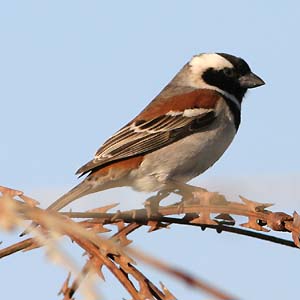


I'm finding that the more I'm willing to question the quiet (sometimes almost silent) assumptions I make about life, and humanity in particular, the more I simply notice the others who share the spaces I live in and move through. More and more often I don't seem to have to remind myself not to be sidetracked by the overwhelming humanness that surrounds me most of the time.
Imagine that this is what we did, that this is what we taught our children, that this is what we expected, kindly but firmly of each other--always and everywhere knowing where we are, knowing the value of place more, much more than the illusory value of time.
Friday, March 5, 2010
Vine Deloria Quotes Camus
Christianity, no doubt, was only able to conquer its catholicity by assimilating as much as it could of Greek thought. But when the Church dissipated its Mediterranean heritage, it placed the emphasis on history to the detriment of nature, caused the Gothic to triumph over the romance, and destroying a limit in itself, has made increasing claims to temporal power and historical dynamism. When nature ceases to be an object of contemplation and admiration, it can be nothing more than material for an action that aims at transforming it. These tendencies--and not the real strength of mediation, which would have compromised the real strength of Christianity--are triumphing, in modern times, to the detriment of Christianity itself, by inevitable turn of events. *If, as Camus would define it, the choice for this century was between history and nature, somehow we made a very bad bargain when we chose history because it appears history has come to an end. And we are very close to destroying nature.
- Vine Deloria, God is Red (Golden, Colorado: Fulcrum Publishing, 1994), 58
*Albert Camus, The Rebel (New York: Vintage Books, 1956), 299
Thursday, March 4, 2010
Who's Minding the Store?
How many of you...raise your hands...how many of you expect 'nature' to take care of the human problem on the planet (I'm assuming, of course, the you also think there is a human problem and know what I mean by that)? How many of you expect that something dramatic, which is beyond direct human-doing, is going to happen that will greatly disrupt the normalcy of life on the planet?
I ask because I'm wondering how prevalent this particular fantasy is. Is it emerging newly in our culture? Is it truly something different, or is it a variation on the salvation mythologem so prominent in this human culture? Is it possibly something in the genes that's coming forward, or something in the collective unconscious.
Collectively we're an odd occurrence. One of the primary memes in our culture is the fear of death; yet from the moment our ancestors set our feet on this path now coming to it's inevitable end, we have been slowly committing both our own and other living beings' lives to a juggernaut toward extinction. We embrace death as a beloved enemy.
So what meaning does it have that some part of some of us longs for 'nature's' intervention, even if it means that many, many of us will surely die?
I'm not sure I'm asking the right questions or asking these questions rightly, but I am sure there's something there.
I'd love to hear your thoughts on this.
I ask because I'm wondering how prevalent this particular fantasy is. Is it emerging newly in our culture? Is it truly something different, or is it a variation on the salvation mythologem so prominent in this human culture? Is it possibly something in the genes that's coming forward, or something in the collective unconscious.
Collectively we're an odd occurrence. One of the primary memes in our culture is the fear of death; yet from the moment our ancestors set our feet on this path now coming to it's inevitable end, we have been slowly committing both our own and other living beings' lives to a juggernaut toward extinction. We embrace death as a beloved enemy.
So what meaning does it have that some part of some of us longs for 'nature's' intervention, even if it means that many, many of us will surely die?
I'm not sure I'm asking the right questions or asking these questions rightly, but I am sure there's something there.
I'd love to hear your thoughts on this.
Monday, March 1, 2010
Exhibit Posters
Here are links to the 4 We Are Not Humanity exhibit posters:
These are quite large, so you'll need to reduce them in your reader to 17% to see them effectively.
These are quite large, so you'll need to reduce them in your reader to 17% to see them effectively.
Allen Lobby Exhibit Coming Down Today
To those of you who visited the exhibit of the last couple of months, my thanks. I certainly enjoyed the process of creating it and have enjoyed your presence via this blog. Someone was asking about the quotes poster. I will figure out a way to get all those quotes into the blog for you.
I will continue with my postings here until either I run out of interest in doing it or you all run out of interest in reading it.
As my friend Mark would say, More later....
I will continue with my postings here until either I run out of interest in doing it or you all run out of interest in reading it.
As my friend Mark would say, More later....
Friday, February 26, 2010
Is It Personal?
I have a private counseling practice, in addition to my work at the University. I've been doing that for about 20 years; so I've had plenty of time to watch as my approach to being with people in that setting has changed. I was surprised the first time I heard myself telling someone, 'What you're experiencing is deeply personal, it is about you. On the other hand it isn't personal at all. What you're experiencing in your life is what is happening in everyone's life, one way or another. It's your part of the suffering that's in the world right now, your share of the world's suffering.' (Trust me, the person I was saying this to was in a position to hear and use that perspective.)
Our time, this end, this transition from what has been to what will be, is a deeply wounded time. Put your own personal angst and pain aside for a moment. Put the guilt aside. We are ever and always, living or dead, a part of everything else that exists on this planet. We are made up of the planet. We will return the borrowed pieces that are our individual life to the planet someday. What our civilization has done and is doing to our one and only home we are doing to ourselves, to each other.
I think a time is upon us when we will be greatly tempted to pull even more within, a stance that seems to be one of the hallmarks of this civilization. As the water becomes scarcer, as the changes to the climate make the day to day of our lives more challenging, we'll find ourselves thinking all the more about our needs, our suffering, our piece of pie (sound familiar). The more altruistic of us will focus on the needs of those humans most immediately effected by these changes, those who have virtually no buffers in their lives. We will want to do what we can ameliorate the suffering of these people.
It seems very difficult, even for the most enlightened of us, though, to extend that same care to the earth itself, to our brother and sister animals and plants and insects, the rocks, and the wind which is our breath and the breath of all other breathing things. The voice in our heads that relentlessly demands that we must think of people, we must take care of people, that people must come first is that voice which heeded has created this nightmare we all experience so deeply, so personally, so helplessly.
Do all you can to let your focus move from all that is human, all that is human-related. Let your vision begin to shift. We are lost because our vision is almost always on that which is human and human-related.
Our time, this end, this transition from what has been to what will be, is a deeply wounded time. Put your own personal angst and pain aside for a moment. Put the guilt aside. We are ever and always, living or dead, a part of everything else that exists on this planet. We are made up of the planet. We will return the borrowed pieces that are our individual life to the planet someday. What our civilization has done and is doing to our one and only home we are doing to ourselves, to each other.
I think a time is upon us when we will be greatly tempted to pull even more within, a stance that seems to be one of the hallmarks of this civilization. As the water becomes scarcer, as the changes to the climate make the day to day of our lives more challenging, we'll find ourselves thinking all the more about our needs, our suffering, our piece of pie (sound familiar). The more altruistic of us will focus on the needs of those humans most immediately effected by these changes, those who have virtually no buffers in their lives. We will want to do what we can ameliorate the suffering of these people.
It seems very difficult, even for the most enlightened of us, though, to extend that same care to the earth itself, to our brother and sister animals and plants and insects, the rocks, and the wind which is our breath and the breath of all other breathing things. The voice in our heads that relentlessly demands that we must think of people, we must take care of people, that people must come first is that voice which heeded has created this nightmare we all experience so deeply, so personally, so helplessly.
Do all you can to let your focus move from all that is human, all that is human-related. Let your vision begin to shift. We are lost because our vision is almost always on that which is human and human-related.
Tuesday, February 23, 2010
The Lost Tribes or the Tribe of the Lost
I heard a bad joke many years ago while living in Berkeley: There was a group of people who wandered about in a perpetual state of lostness. They came to be know as the Fukarwe because they were always exclaiming, 'W'ere the fuck are we?'
I've always wanted to walk up to some unsuspecting student on Red Square (the central plaza/hang-out/migration space on the Seattle campus), her ears plugged with disembodied music or animatedly on her cell phone with some other dis-em-body. I'd walk up and gently get her attention. Then I'd ask her to stop, close her eyes... and tell me where she is.
If I were actually able to orchestrate such an implausible event, what might her response be. She would probably describe where she thinks she is based on what her vision told her prior to closing her eyes, or her memory of where she was going, maybe her memory of what she noticed when she last almost bumped into someone or stumbled a bit on the uneven ground.
Try it yourself. Especially outside. Stop mid-stride someplace, close your eyes. Use all your other senses, just standing there, to know where you are.
We don't know where we are most of the time.
Try it again, but this time in a pleasant, comfortable, safe, outdoor space. Notice what happens inside your mind. See if you can be where your senses tell you you are. Try with your eyes closed. We rely so much on our sight, which is more closely tied to our unquestioned cultural vision, than our other senses tend to be.
I've always wanted to walk up to some unsuspecting student on Red Square (the central plaza/hang-out/migration space on the Seattle campus), her ears plugged with disembodied music or animatedly on her cell phone with some other dis-em-body. I'd walk up and gently get her attention. Then I'd ask her to stop, close her eyes... and tell me where she is.
If I were actually able to orchestrate such an implausible event, what might her response be. She would probably describe where she thinks she is based on what her vision told her prior to closing her eyes, or her memory of where she was going, maybe her memory of what she noticed when she last almost bumped into someone or stumbled a bit on the uneven ground.
Try it yourself. Especially outside. Stop mid-stride someplace, close your eyes. Use all your other senses, just standing there, to know where you are.
You are where the sounds are...We tell ourselves where are all the time. It's generally some kind of internal monologue describing to ourselves where we are--and more and more of us seem to require some kind continuous soundtrack or ever changing theme song. Generally, I think, we do not use all our senses to let us know where we are. We don't really know where we bodily are. We let our minds interpret for us where we are, in the context of things we're mostly not even aware of. We are in this place relative to where we were before (the past), where we need to get to (the future), what we're attempting to do (or not do), what our emotions are--not where our animal bodies relay to us.
You are where the smells are...
You are where the feelings against your skin are....
You are where the air tastes like....
We don't know where we are most of the time.
Try it again, but this time in a pleasant, comfortable, safe, outdoor space. Notice what happens inside your mind. See if you can be where your senses tell you you are. Try with your eyes closed. We rely so much on our sight, which is more closely tied to our unquestioned cultural vision, than our other senses tend to be.
Monday, February 22, 2010
Doing Something Practical (whatever that means)
Be forewarned, this is definitely a parenthetic posting. (And it's long, too.)
Every now and then I have the recurring fear that someone (maybe you) is going to ask me what I'm doing to make a difference, given the relentless topic of my postings on this blog. So I'm going to be preemptive about this (because, obviously, I don't think I'm doing very much).
I recycle and compost assiduously. I try to buy organic (and natural--whatever that means) when it's not prohibitively expensive to do so. I try very hard to be respectful of water (not using too much of it). I try not to drive too much. When I drive I will put the vehicle in neutral when going down steep hills to cut down on gas usage and engine noise. I don't generally watch the TV news or listen to the radio news (I relate better to the world if I listen more to wind, birds and insects rather than the 'news.'). I don't get caught up (if I am vigilant) in political or socio-political discussions (arguments usually. They seem so pointless, generally, just people taking the opportunity to rev up the adrenaline.). I talk about all this with anyone who shows the slightest interest.
Now, to me, none of that seems like very much (except maybe, the talking to people about all this; even I can concede that that's probably of some importance, maybe a lot); in fact, some of it seems pretty silly (coasting my car downhill for God's sake!).
Anyway, my friend Jon is trying to produce some of his own food: chickens for eggs, turning his living room into a greenhouse for his vegetable garden starts, using his hands and intellect to build things. He also talks about all this to other people, too. I have no idea whether he coasts his car on downhill slopes or not.
Someone who is a 'follower' of this blog (Nageshuu) also follows the blog of Kate and Adam in Nigeria. In relationship to what they have done and seem to be doing, I feel ineffective and uninvolved (check it out, if you didn't actually click on that link).
Here's the question (finally. I know you were beginning to worry): what constitutes doing enough about all this? What constitutes doing anything at all about all this? To some extent, maybe even to a great extent, the best intentioned of us gets bogged down in that endless helplessness of what could I possibly do that would matter? I think this needs to be brought out into the open. Many, many of us are stuck in our quiet despair or resignation (or both) about all this thinking that there's nothing we could do that would really matter.
Now, if you've been even a little inclined to jump in with a comment or thought, let this be the time. We all need to hear from each other.
Friday, February 19, 2010
Hammering the Nail
I continue to look for the most basic tenet that explains what it is we lost--what changed that allowed us as a human group to do what we've done to our home over the last 10 to 15 thousand years--and I keep coming back to the same one: it was when our vision changed.
When we simply were, without question, part of the community of life our vision was just that: we were a part of everything. When some of our ancestors chose the path of agriculture and pastoralism, our vision changed so that we started to exercise control over the growing of plants and animals, disregarding the determinism in each of the life forms we attempted to control, in favor of our own 'survival' (read preferences).
At that point of 'success' our vision was no longer as a part of everything. We had taken dominion over some things, a slippery slope to be sure. Once we started trying to control some of life, we had no choice but to either abandon the notion altogether or attempt to control all of life (we had eaten of the tree of the knowledge of good and evil). Obviously we chose the latter.
We could no longer be a part of the rest of life. We were now a part from the rest of life. The die was cast. We have not retreated ever since.
When we simply were, without question, part of the community of life our vision was just that: we were a part of everything. When some of our ancestors chose the path of agriculture and pastoralism, our vision changed so that we started to exercise control over the growing of plants and animals, disregarding the determinism in each of the life forms we attempted to control, in favor of our own 'survival' (read preferences).
At that point of 'success' our vision was no longer as a part of everything. We had taken dominion over some things, a slippery slope to be sure. Once we started trying to control some of life, we had no choice but to either abandon the notion altogether or attempt to control all of life (we had eaten of the tree of the knowledge of good and evil). Obviously we chose the latter.
We could no longer be a part of the rest of life. We were now a part from the rest of life. The die was cast. We have not retreated ever since.
Thursday, February 18, 2010
Vine Deloria Quote
Who will find peace with the lands? The future of mankind lies waiting for those who will come to understand their lives and take up their responsibilities to all living things. Who will listen to the trees, the animals and birds, the voices of the places of the land?
Wednesday, February 17, 2010
Response to Kay's Comment to the Previous Posting
In the previous posting of the quote by Raymond Chipeniuk, the key sentence for me is this:
It's very difficult for us to step outside the literalness of our culture. I don't think Chipeniuk is suggesting we all go back to some previous time and place, a time and place that clearly does not exist in most of the world any more and could not exist for many of us, given how many of us there are now.
The emphasis I would place in asking the questions we're all contemplating here is how do we allow ourselves to once again fall in love with the earth, our one and only home, the home we share with countless other expressions of life that are not human? How do we follow the genetic drive within us to be on, in, and of this earth? How do we allow, once again, that dying is part of living? We kill to eat. We will one day be eaten. How do we allow ourselves to seriously question what it is we really need?
We must make ourselves indegenes, natives returning to a lost landscape still somewhere in our hearts and minds, the Paleolithic ideal, a country of abundant wildlife, rich in fruitful native vegetation, pure water, and fresh air.The italics and bold above are mine.
It's very difficult for us to step outside the literalness of our culture. I don't think Chipeniuk is suggesting we all go back to some previous time and place, a time and place that clearly does not exist in most of the world any more and could not exist for many of us, given how many of us there are now.
The emphasis I would place in asking the questions we're all contemplating here is how do we allow ourselves to once again fall in love with the earth, our one and only home, the home we share with countless other expressions of life that are not human? How do we follow the genetic drive within us to be on, in, and of this earth? How do we allow, once again, that dying is part of living? We kill to eat. We will one day be eaten. How do we allow ourselves to seriously question what it is we really need?
Tuesday, February 16, 2010
Quotes from 'Coming Home to the Pleistocene'
Conservationists are actually doing harm by trying to convert the lay mind to the view that human artifactual reality is part of nature.... We must make ourselves indegenes, natives returning to a lost landscape still somewhere in our hearts and minds, the Paleolithic ideal, a country of abundant wildlife, rich in fruitful native vegetation, pure water, and fresh air. Otherwise we will remain what we have been for ten thousands of years: a sort of perpetual exotic, never ceasing to invade, disrupt, and degrade the pre-existing natural landscapes.
- Raymond Chipeniuk
'Coming Home to the Pleistoscene,' p. 168
Our human ecology is that of a rare species of mammal in a social, omnivorous niche. Our demography is one of a slow-breeding, large, intelligent primate. To shatter our population structure, to become abundant in the way of rodents, not only destroys our ecological relations with the rest of nature, it sets the stage for our mass insanity.
- Paul Shepard
'Coming Home to the Pleistocene,' p. 169
What an odd day I'm having
I read quite a bit of Paul Shepard's Coming Home to the Pleistocene over the long weekend. This book is not an easy one for me to read. The man was very erudite. First time in awhile I've read a book with so many words I don't know. The context from which he wrote about us is so inclusive, that my culturally conditioned mind finds veritably no avenue of escape. There are no excuses that work. There is no need for excuses anyway, no purpose in them, except as a futile effort to not see what I actually do see.
Today I am experiencing another set of scales having been lifted from my eyes (how many layers of scales are there!). Today for the first time, I seem to be really seeing us as animals. How very strange it is, too. I see us as animals walking around in these weird disguises, striding around inside these strangely thin veneers of disguises. How odd it is to see us all trying not to look like animals. We walk funny. We sit funny. We look at each other and talk to each other in ways that don't really make sense. We seem to be acting as though what we are doing is terribly important, when it clearly is not.
This is all pretty disquieting today. Here I am at work. Interacting with quite a few people, sensing this whole other scale of being which is completely, almost entirely incongruous to how we are acting. I tend to be a very nice person (most of the time). I err in that direction (most of the time). I'm going to be the first one to say hello when we meet. I will ask you how you are doing or how your day is going...and I'll really want to know, if you really want to say. Today, it would feel more natural to simply match you gaze for gaze, simply looking at and taking you in. Not using words unless absolutely necessary. Letting you go with no further need, unless another need presented itself.
Too many words. We use too many words. We talk too much. We write too much (I know, I know). We think we are communicating...and we are. But is it needed. Is what we're communicating needed. We loose ourselves in communication. We might leave it alone a little. What if we had an international day of silence?
Today I am experiencing another set of scales having been lifted from my eyes (how many layers of scales are there!). Today for the first time, I seem to be really seeing us as animals. How very strange it is, too. I see us as animals walking around in these weird disguises, striding around inside these strangely thin veneers of disguises. How odd it is to see us all trying not to look like animals. We walk funny. We sit funny. We look at each other and talk to each other in ways that don't really make sense. We seem to be acting as though what we are doing is terribly important, when it clearly is not.
This is all pretty disquieting today. Here I am at work. Interacting with quite a few people, sensing this whole other scale of being which is completely, almost entirely incongruous to how we are acting. I tend to be a very nice person (most of the time). I err in that direction (most of the time). I'm going to be the first one to say hello when we meet. I will ask you how you are doing or how your day is going...and I'll really want to know, if you really want to say. Today, it would feel more natural to simply match you gaze for gaze, simply looking at and taking you in. Not using words unless absolutely necessary. Letting you go with no further need, unless another need presented itself.
Too many words. We use too many words. We talk too much. We write too much (I know, I know). We think we are communicating...and we are. But is it needed. Is what we're communicating needed. We loose ourselves in communication. We might leave it alone a little. What if we had an international day of silence?
Friday, February 12, 2010
What are Universities About?
From my current perspective, I cannot very easily separate the various aspects of this global human culture from every other aspect. But I spend much of my awake time each week at a University; so most of my observations about us, my interactions with others of us, my own sense of what I am or am not accomplishing in my life is experienced here.
A few years ago I went through a period of questioning what I was doing for money (aka, my job, my career); and even though there were far more aspects of my job that I enjoyed than not, I still wondered if this was what I really wanted to continue doing. As I quandered over other options and possibilities, I ultimately ended up telling myself that 'at least I was doing no harm' in my work here at the university. My argument ended up not being very convincing to my self.
I looked around me at the students, faculty, and staff here, many of whom I had very rewarding relationships with, and realized that, even so, we were really all about keeping the cultural machinery going. We were still engaged in the business of keeping the embers of rememberance thoroughly doused...most of the time. I think this was the point at which I consciously decided that, given every opportunity here, I would inspire as much doubt as I reasonably could without running the risk of alienation (even though I do feel like a member of an alien nation).
Daniel Quinn's My Ishmael gives a very interesting perspective on the system of education that has evolved in this culture.
A few years ago I went through a period of questioning what I was doing for money (aka, my job, my career); and even though there were far more aspects of my job that I enjoyed than not, I still wondered if this was what I really wanted to continue doing. As I quandered over other options and possibilities, I ultimately ended up telling myself that 'at least I was doing no harm' in my work here at the university. My argument ended up not being very convincing to my self.
I looked around me at the students, faculty, and staff here, many of whom I had very rewarding relationships with, and realized that, even so, we were really all about keeping the cultural machinery going. We were still engaged in the business of keeping the embers of rememberance thoroughly doused...most of the time. I think this was the point at which I consciously decided that, given every opportunity here, I would inspire as much doubt as I reasonably could without running the risk of alienation (even though I do feel like a member of an alien nation).
Daniel Quinn's My Ishmael gives a very interesting perspective on the system of education that has evolved in this culture.
Thursday, February 11, 2010
David Abram Quote
This is from the linked interview in the posting below:
London: What happens to a culture bereft of magic?
Abram: One thing is that its relation to the natural landscape is tremendously impoverished. In fact, by our obliviousness, by our forgetfulness of all of these other styles of awareness — the other animals, the plants, the waters — we have brought about a crisis in the natural world of unprecedented proportions — not out of any meanness, but simply because we really don't recognize that nature is there. It seems to us, in our culture, to be a kind of passive backdrop against which all of our human events unfold, and it's human events that are meaningful and what happens in nature, well, we don't really notice it, it's not really there. It's not vital.
How different that is from the awareness of a magical or animistic culture for whom everything we do as humans is so profoundly influenced by our interactions with the earth underfoot and the air that swirls around us and the other animals....
...I don't think there is a way for those who work in service to the earth — for environmentalists, ecologists — to really woo our culture back into a reciprocal or sustainable relation with the land until we draw folks back to our senses, because our sensing bodies are our direct contact with the rest of the natural world. It is not by being abstract intellects that we are going to fall in love again with the rest of nature. It's by beginning to honor and value our direct sensory experience: the tastes and smells in the air, the feel of the wind as it caresses the skin, the feel of the ground under our feet as we walk upon it. And how much easier it is to feel that ground if you allow yourself to sense that the ground itself is feeling your steps as you walk upon it.
London: What happens to a culture bereft of magic?
Abram: One thing is that its relation to the natural landscape is tremendously impoverished. In fact, by our obliviousness, by our forgetfulness of all of these other styles of awareness — the other animals, the plants, the waters — we have brought about a crisis in the natural world of unprecedented proportions — not out of any meanness, but simply because we really don't recognize that nature is there. It seems to us, in our culture, to be a kind of passive backdrop against which all of our human events unfold, and it's human events that are meaningful and what happens in nature, well, we don't really notice it, it's not really there. It's not vital.
How different that is from the awareness of a magical or animistic culture for whom everything we do as humans is so profoundly influenced by our interactions with the earth underfoot and the air that swirls around us and the other animals....
...I don't think there is a way for those who work in service to the earth — for environmentalists, ecologists — to really woo our culture back into a reciprocal or sustainable relation with the land until we draw folks back to our senses, because our sensing bodies are our direct contact with the rest of the natural world. It is not by being abstract intellects that we are going to fall in love again with the rest of nature. It's by beginning to honor and value our direct sensory experience: the tastes and smells in the air, the feel of the wind as it caresses the skin, the feel of the ground under our feet as we walk upon it. And how much easier it is to feel that ground if you allow yourself to sense that the ground itself is feeling your steps as you walk upon it.
About Blogging
This is my first blogging experience...and a singular experience it has been. It's way too much like talking to myself. I think that this is partly because there aren't very many readers leaving comments, but it's also just the medium. More than anything, I guess, it feels like talking to myself. And I'm fine with that. I do it all the time. But it's not altogether satisfying.
I miss the dialogue. I miss seeing the eyes of someone I'm sharing this with, the body postures, the breathing. All the things my senses require to actually close the circuit between you and me.
I'll have to say, though, it's also a bit like my experience of writing poems. Poems generally come to me in a way that feels like a gift...from the muse, from some deeper/broader/more complete awareness than is my usual. I generally get to savor the poem after (and during, but that's different). Even then, though, after the poem has been given, my greatest yearning is to read it out loud, and then to read it out loud to someone else. It is the spell of the sensuous. (My deepest gratitude to David Abram for having written this book. No finer book have I ever read.)
Feel the freedom of sharing your thoughts with me and with the others who might read them here.
I miss the dialogue. I miss seeing the eyes of someone I'm sharing this with, the body postures, the breathing. All the things my senses require to actually close the circuit between you and me.
I'll have to say, though, it's also a bit like my experience of writing poems. Poems generally come to me in a way that feels like a gift...from the muse, from some deeper/broader/more complete awareness than is my usual. I generally get to savor the poem after (and during, but that's different). Even then, though, after the poem has been given, my greatest yearning is to read it out loud, and then to read it out loud to someone else. It is the spell of the sensuous. (My deepest gratitude to David Abram for having written this book. No finer book have I ever read.)
Feel the freedom of sharing your thoughts with me and with the others who might read them here.
Monday, February 8, 2010
Too Many of Us
I couldn't wait to get tomorrow's posting up. So I'm just going to throw this one out there. It seems to be the biggest sticking point for many of us: What to do about the fact that there are simply too many people on this planet? Is it really too many people? I don't think so. There aren't too many Navajo people. There aren't too many Bushmen of the Kalahari. There aren't too many Ladakhi. There are too many people like ourselves who do not know how to live on this planet without killing it.
Try noticing what happens inside your own mind when you consider this question. Try to very honestly notice what gets in the way of looking at this question from the largest possible perspective. Notice all the 'yeah, but' thoughts that arise. Notice that we don't necessarily have a hard time considering that maybe there are too many mosquitoes or too many rats or too many 'harmful' bacteria or, perhaps, too many dogs or cats. But too many of our own kind?
Run with this one a little....
Try noticing what happens inside your own mind when you consider this question. Try to very honestly notice what gets in the way of looking at this question from the largest possible perspective. Notice all the 'yeah, but' thoughts that arise. Notice that we don't necessarily have a hard time considering that maybe there are too many mosquitoes or too many rats or too many 'harmful' bacteria or, perhaps, too many dogs or cats. But too many of our own kind?
Run with this one a little....
Asking the Right Questions
In Kay's comment to the last blog entry, she asked, "Where do we go from here?"
When I have conversations with people about all this, it's not unusual for this question to be asked; and I generally beg the question. I don't know what you need to do next. In most ways I don't even know what I need to do next. I seem to be pretty good at asking, raising, formulating the questions. I don't think of myself as being much of answer guy.
For me, my own life is so full of what seem to be contradictions, that at times, I can barely stand the seeming hypocrisy of even keeping this blog going, keeping the conversations going. Like most of us, I'm 'on the grid' for almost everything:
What I mean by 'on the grid' is all the different ways in which I work just to make enough money to buy the things I either need or want. I don't supply any of my own electricity. I don't really know where my water comes from nor the natural gas that heats the house I live in. I live far enough away from the job that pays me my salary, that I have to rely on someone to get me back and forth from there to where I live. I don't grow any of my own food and probably never could grow enough, even if I were more ambitious in this regard than I am.
In all honesty, even as much as I enjoy my job, if asked what I do for a living, I'd have to say, 'I make money.'
You see where I'm going with this. How much are any of us able to step off the grid, stop relying on the corporate entities for what we need? This seems to me to be the most consequential thing any of us can do...that and of course INSPIRE DOUBT IN OTHERS!
When I have conversations with people about all this, it's not unusual for this question to be asked; and I generally beg the question. I don't know what you need to do next. In most ways I don't even know what I need to do next. I seem to be pretty good at asking, raising, formulating the questions. I don't think of myself as being much of answer guy.
For me, my own life is so full of what seem to be contradictions, that at times, I can barely stand the seeming hypocrisy of even keeping this blog going, keeping the conversations going. Like most of us, I'm 'on the grid' for almost everything:
- I have a job for which I work 40+ hours per week
- My paycheck goes directly into my checking account
- I use that money to buy food, water, shelter, heat, electricity, an automobile, gas, bus transportation, medical care, entertainment, telephone, insurance (there's an odd one), someone to pick up my garbage and recycling
What I mean by 'on the grid' is all the different ways in which I work just to make enough money to buy the things I either need or want. I don't supply any of my own electricity. I don't really know where my water comes from nor the natural gas that heats the house I live in. I live far enough away from the job that pays me my salary, that I have to rely on someone to get me back and forth from there to where I live. I don't grow any of my own food and probably never could grow enough, even if I were more ambitious in this regard than I am.
In all honesty, even as much as I enjoy my job, if asked what I do for a living, I'd have to say, 'I make money.'
You see where I'm going with this. How much are any of us able to step off the grid, stop relying on the corporate entities for what we need? This seems to me to be the most consequential thing any of us can do...that and of course INSPIRE DOUBT IN OTHERS!
Thursday, February 4, 2010
Somewhere Over the Rainbow
There's are rendition of this song by Israel Kamakawiwo'ole that I find so haunting, I can barely stand it. I listen to it and it possesses me and won't let me go. I can't remember the last time a song effected me this way.
What is that longing, that almost completely naked yearning in this song? It's there regardless of who sings it, I think. It's in the song. In the movie Finding Forrester, there is a minimalist, instrumental version by Bill Frisel, that also haunts...in its own way.
Still, there's something about Is' version
I can't imagine that there is anyone who has not experienced that bittersweet melancholy of longing for something we imagine we once had or once experienced. Depending on our personal makeup, we either get caught up in the feeling and get lost for awhile; or we may dismiss it as sentimental and move on. Either way (or one of the millions of other options for experiencing this that lies between those two) most of us know that feeling.
What if that is in the nature of this particular human culture of which we are a part. What if it is inevitable as the result of having turned our backs on being an animal, so that no matter where we are, who we're with, what we are doing, we are missing the knowing of being home.
What is that longing, that almost completely naked yearning in this song? It's there regardless of who sings it, I think. It's in the song. In the movie Finding Forrester, there is a minimalist, instrumental version by Bill Frisel, that also haunts...in its own way.
Still, there's something about Is' version
I can't imagine that there is anyone who has not experienced that bittersweet melancholy of longing for something we imagine we once had or once experienced. Depending on our personal makeup, we either get caught up in the feeling and get lost for awhile; or we may dismiss it as sentimental and move on. Either way (or one of the millions of other options for experiencing this that lies between those two) most of us know that feeling.
What if that is in the nature of this particular human culture of which we are a part. What if it is inevitable as the result of having turned our backs on being an animal, so that no matter where we are, who we're with, what we are doing, we are missing the knowing of being home.
Tuesday, February 2, 2010
Invocation
And all is seeking death
Death to the normal, the ritual sameness
Of the every day
Death to the tranquility of the no-disruptive-pleasure
I wake from dreams in which I cannot breathe
I cannot breathe from choking on what is requisite
On what is needed, what is there
And I cannot have
I fear I may no longer be content with
I did the best I could
I fear the time comes when my best is no longer enough
I must do better
I must somehow do less
All is seeking death
The vessel longs to be broken
All longs to be spilt upon the earth
To seek the lower places, the lowest
Where gravity calls
If the picture were to be painted
Purple would prevail and dark violet
And the deep red of fresh blood just released
What scarlet could would find itself
Splattered in bright rosettes
Blurred beyond its edges
Undefined
Remnant
I am not Death come to free you
You have lived the nightmare of freedom for too long
I am come now to bind you up
To embrace you, to hold you fast
I am come to you now of necessity
Of yours
Of mine
Of ours
I am the divine
What is holy, fecund and pure
I am your one and only redemption
Your little life always and ever has been mine
I always have held it safely entwined
Bound in the webby stream
Held in cloud droplets
In the color that reaches the eye
In the tang and taste of molding leaf and worm
I am the rhythm, the rhyme and verse
The insect song and leafy chime
And beyond the blue and black to star
And thought subsiding and rising
And sinew clasping bone
I am and all that is
Come dancing
Round me dancing
Joy dancing
Home
Death to the normal, the ritual sameness
Of the every day
Death to the tranquility of the no-disruptive-pleasure
I wake from dreams in which I cannot breathe
I cannot breathe from choking on what is requisite
On what is needed, what is there
And I cannot have
I fear I may no longer be content with
I did the best I could
I fear the time comes when my best is no longer enough
I must do better
I must somehow do less
All is seeking death
The vessel longs to be broken
All longs to be spilt upon the earth
To seek the lower places, the lowest
Where gravity calls
If the picture were to be painted
Purple would prevail and dark violet
And the deep red of fresh blood just released
What scarlet could would find itself
Splattered in bright rosettes
Blurred beyond its edges
Undefined
Remnant
I am not Death come to free you
You have lived the nightmare of freedom for too long
I am come now to bind you up
To embrace you, to hold you fast
I am come to you now of necessity
Of yours
Of mine
Of ours
I am the divine
What is holy, fecund and pure
I am your one and only redemption
Your little life always and ever has been mine
I always have held it safely entwined
Bound in the webby stream
Held in cloud droplets
In the color that reaches the eye
In the tang and taste of molding leaf and worm
I am the rhythm, the rhyme and verse
The insect song and leafy chime
And beyond the blue and black to star
And thought subsiding and rising
And sinew clasping bone
I am and all that is
Come dancing
Round me dancing
Joy dancing
Home
Adam C. Hall
July 5, 2008
July 5, 2008
Farming
...If there is a single complex of events responsible for the deterioration of human health and ecology, agricultural civilization is it. At its worst, agriculture is industrial and corporate, poisoning the whole planet with chemical compounds not found in nature. It has made plants and animals into what geneticist Helen Spurway calls 'goofies,' the deformed animals whose wild genetic homeostasis has been destroyed.
Monday, February 1, 2010
N Scott Momaday
I hope you women reader's won't take offense to Momaday's use of the male nouns and pronouns.
Once in his life a man ought to concentrate his mind upon the remembered earth, I believe. He ought to give himself up to a particular landscape in his experience, to look upon it, to dwell upon it. He ought to imagine that he touches it with his hands at every season and listens to the sounds that are made upon it. He ought to imagine the creatures there and all the faintest motions of the wind. He ought to recollect the glare of noon and all the colors of the dawn and dusk....as one would a lover (my words).
Subscribe to:
Posts (Atom)