Over the weekend I was thinking about music.
Music has always been a huge part of my life. Still is. For a short time in my undergraduate years I was a music major, but I couldn't sustain it because it was way too competitive for me. Most of those other music majoring students had been reared on classical music and had studied formally for most of their childhoods.
I simply loved music. My music background was in the Southern Baptist church and the old time gospel songs my parents sang as we traveled by car from one Army post to the next. I learned to read music by attending a shaped note training in a country Assembly of God church in rural, southern Alabama. (Isn't that a clincher? Southern Alabama. What a double dose!)
I wonder how music is experienced in your life. It seems to be pretty important to us culturally.
I don't think most people walking around with earphones are listening to talking. What's a movie or a television program without a musical soundtrack. I mean, really, how would you even know what to feel when watching a movie without the music?
I often listen to music over an Internet radio station when I'm in my office at work. I listen to CDs when I'm in my truck. People pay big bucks to go to concerts to hear live music. People sing in choirs and bands and staged musicals.
Many of us sing along with whatever music we're listening to. Sometimes, maybe, we just sing on our own because we simply want to or we need to or we just can't help it.
Now that's the piece I've been coming to here.
Think about music for moment. Just let your mind go where it wants to when it contemplates music.
Now think about music without any reference in your thinking to performance.
Have you ever seen a child, sitting by herself and playing and making up a song as she sits there or as she dances around or walks? When was the last time you did that? Have you ever done that?
Like me, you probably know someone who says they can't sing. What does this mean, they can't sing? If you take the time and care to inquire about what this person means, it probably includes things about how they think they sound or what they've been told about how they sound. Perhaps they would say they can't carry a tune. You know, stuff like that. We've all heard it. Maybe some of us have been the ones to say it.
Well all of that implies that we have a notion of how singing is supposed to be, how it is supposed to sound, and that whatever we are doing is not the way it's supposed to be done. Says who?
Before music was co-opted by the culture of which we are a part, I suspect it played a different role in people's lives. What was music before it became something primarily either performed or listened to? What was music like when there was more spontaneity in it as an expression?

Tuesday, March 30, 2010

I'm Not Gone...
just overly busy. Don't despair (or exult, if that's what you feel) at the lack of new postings here. I'll be back soon.
Tuesday, March 23, 2010
More About the Dark
Many years ago I was camping with a friend on BLM land in New Mexico, near Taos. We were up on a slope, miles from the nearest road and Ojo Caliente Mineral Springs; though we could see the road from our campsite. Every evening Andrew and I would go to bed to the sound of a coyote pack celebrating the ending of their day and awaken every morning to their opening salute to the not yet visible sun, as though their yelping was required to bring the sun forth.
At that time there wasn't a whole lot of traffic on this roadway, especially after the dark had set in, making it all the more dramatic when a vehicle would come into view, with it's beams of light sweeping across the darkened terrain. Light pollution, I called it then, somewhat puritanically. Now I'm not sure that I was simply being a purist in calling it that.
Light, like air and noise pollutants, is something we inflict on the others with whom we share this wonderful biosphere. Nor do we stop to measure how our fear of dark or addiction to light has impacted life here and our own participation in it.
Have you reflected on your own relationship to darkness? Are you a lover of the light to the detriment of loving the dark?
We even fear the symbolic dark, the darkness of depression and the deep inward-reaching that comes to all of us from time to time and which, to some extent, is an appropriate response to what it is we experience (consciously or not) as our home continues to deteriorate. Culturally we fear and hate this darkness, and we run to the pharmaceuticals for our relief and as our hope for salvation.
In Christianism, Christ is said to have brought the light. Buddhism considers the most heightened state of human possibility is enlightenment.
I don't want to belabor this. I just want to challenge you to reexamine your own relationship to darkness. See the cultural assumptions you do not question about this.
At that time there wasn't a whole lot of traffic on this roadway, especially after the dark had set in, making it all the more dramatic when a vehicle would come into view, with it's beams of light sweeping across the darkened terrain. Light pollution, I called it then, somewhat puritanically. Now I'm not sure that I was simply being a purist in calling it that.
Light, like air and noise pollutants, is something we inflict on the others with whom we share this wonderful biosphere. Nor do we stop to measure how our fear of dark or addiction to light has impacted life here and our own participation in it.
Have you reflected on your own relationship to darkness? Are you a lover of the light to the detriment of loving the dark?
We even fear the symbolic dark, the darkness of depression and the deep inward-reaching that comes to all of us from time to time and which, to some extent, is an appropriate response to what it is we experience (consciously or not) as our home continues to deteriorate. Culturally we fear and hate this darkness, and we run to the pharmaceuticals for our relief and as our hope for salvation.
In Christianism, Christ is said to have brought the light. Buddhism considers the most heightened state of human possibility is enlightenment.
I don't want to belabor this. I just want to challenge you to reexamine your own relationship to darkness. See the cultural assumptions you do not question about this.
Monday, March 22, 2010
Too Much Light
I live in the city now. Until a few months ago I was living in the suburbs. One of the differences I've noticed (other than the fact that I no longer live in a relatively old forest) is that there are a lot more streetlights in the city, and a lot more people who leave porch/outside lights on all night.
All fear issues aside for the moment, try to imagine that as a culture we valued darkness, that we actually cultivated darkness into our lives. What if we learned how to move in the darkness using our limited sight and hour heightened hearing, smelling, and feeling? What if darkness were not considered 'bad' in the same way that light is considered 'good?' What if we simply didn't use as many lights at night as we do?
When I lived in the suburbs there was a route I routinely took on my early morning walk with my dogs. Here in Seattle, we have long winter nights; so my early morning walks were more often than not in the dark. We would walk down the streetlight lit, paved street for a block or two, then we'd walk through a newish cemetery, and finally on this short connecting path through some woods to a neighborhood park, and finally back to the lighted street. I would take a flashlight so I could effectively pick up the dog poop, but I preferred the rest of the walk to be in the dark. I found I could pretty easily make my way along even the connecting path through the woods without any more light than the moon and stars provided.
When I moved to my new residence in the city, one of the first things I found myself doing (I literally noticed that I was doing this), I figured out how to move through the new house in the dark: how to get to the bathroom, how to get upstairs (the stairs are pretty dark in this house). I clearly was feeling that this new place to live was going to be more 'mine' once I knew how to move around in it in the dark.
Think about it. Look within. Question your own beliefs about light and dark.
All fear issues aside for the moment, try to imagine that as a culture we valued darkness, that we actually cultivated darkness into our lives. What if we learned how to move in the darkness using our limited sight and hour heightened hearing, smelling, and feeling? What if darkness were not considered 'bad' in the same way that light is considered 'good?' What if we simply didn't use as many lights at night as we do?
When I lived in the suburbs there was a route I routinely took on my early morning walk with my dogs. Here in Seattle, we have long winter nights; so my early morning walks were more often than not in the dark. We would walk down the streetlight lit, paved street for a block or two, then we'd walk through a newish cemetery, and finally on this short connecting path through some woods to a neighborhood park, and finally back to the lighted street. I would take a flashlight so I could effectively pick up the dog poop, but I preferred the rest of the walk to be in the dark. I found I could pretty easily make my way along even the connecting path through the woods without any more light than the moon and stars provided.
When I moved to my new residence in the city, one of the first things I found myself doing (I literally noticed that I was doing this), I figured out how to move through the new house in the dark: how to get to the bathroom, how to get upstairs (the stairs are pretty dark in this house). I clearly was feeling that this new place to live was going to be more 'mine' once I knew how to move around in it in the dark.
Think about it. Look within. Question your own beliefs about light and dark.
Friday, March 19, 2010
Now
In the last entry I stated that, in seeking some experience of release from time, some people pursue a discipline of being in the now. I suspect that many of you reading this may know from your own experience what I'm talking about.
For the sake of this discussion, let's say that there are and have been 2 kinds of human cultures throughout our existence as a cultural species: cultures of time and cultures of place. At length I've spoken about our culture, a culture whose cornerstone is that concept we call history: we (our civilization) has a clear and demonstrable beginning point, followed by a series of events, leading toward some indeterminate, but inevitable end (You can't have a beginning without an end. One is a priori of the other.).
Because our culture (and thus ourselves, to the extent we have not questioned the beliefs and assumptions held deeply within our own psyches) is defined by time (see yesterday's posting), we are ever and always either moving away from the past or toward the future, both of which do not really exist. They are simply concepts we accept as reality. The past is some other now brought into the now via memory. The future does not and can never exist, it is a series of thoughts and emotions about what might be. There is, in fact, always and only now.
Inevitably, then, our culture can only acknowledge and experience now as a series of nows leading from one to the next, so that experientially we are never now. We're never here (now), because we're always either coming from someplace or going to someplace.
Oops, I gave myself away. Look at how easy it was in the last paragraph for me to move from now to here. I wonder if it was just a seamless for you, the reader, to go right along with me. Note how easy it is for us to equate time with place: I was there then; I'm here now; I'll be someplace else later. What we've done as a culture is re-place place with time. What is a priori there?
Place always and everywhere simply is. Time never is: what time is it? 8:30, I mean, 8:31, no, 8:32. Someone invented these minute time measurers, like the atomic clock to try and bridge this cultural paradox of time taking precedence over place. Perhaps if we can get our measurement of time to be smaller and smaller and smaller, we may finally be able to get here the instant something simply is (read now).
If you are now, you are here. Now and here are the same. Being a people of place rather than a people of time means that one is probably in that experiential state of being congruous with all that is around you. I am now and so is everything else. There isn't anything else. This is it. Even my thoughts about the past and the future are now. I am inseparable from now, which means I am inseparable from place, from here.
We (our culture) cannot have a true relationship with place (where we are) because we cannot ever be here. If we cannot have a relationship with here and now, how can we ever know that experience of belonging? We are always getting somewhere, someplace, sometime (not very precise, is it?). We can never be home. No wonder our religions must include the existence of some place out of time beyond when our time is done (death) so we can finally be home.
If I can never know that this is home, why would I care about it. I'm just stuck here for a time until I can get to where I'm really going...over yonder. This place doesn't really matter because it's not real to me. It is only a means to get me over there.
For the sake of this discussion, let's say that there are and have been 2 kinds of human cultures throughout our existence as a cultural species: cultures of time and cultures of place. At length I've spoken about our culture, a culture whose cornerstone is that concept we call history: we (our civilization) has a clear and demonstrable beginning point, followed by a series of events, leading toward some indeterminate, but inevitable end (You can't have a beginning without an end. One is a priori of the other.).
Because our culture (and thus ourselves, to the extent we have not questioned the beliefs and assumptions held deeply within our own psyches) is defined by time (see yesterday's posting), we are ever and always either moving away from the past or toward the future, both of which do not really exist. They are simply concepts we accept as reality. The past is some other now brought into the now via memory. The future does not and can never exist, it is a series of thoughts and emotions about what might be. There is, in fact, always and only now.
Inevitably, then, our culture can only acknowledge and experience now as a series of nows leading from one to the next, so that experientially we are never now. We're never here (now), because we're always either coming from someplace or going to someplace.
Oops, I gave myself away. Look at how easy it was in the last paragraph for me to move from now to here. I wonder if it was just a seamless for you, the reader, to go right along with me. Note how easy it is for us to equate time with place: I was there then; I'm here now; I'll be someplace else later. What we've done as a culture is re-place place with time. What is a priori there?
Place always and everywhere simply is. Time never is: what time is it? 8:30, I mean, 8:31, no, 8:32. Someone invented these minute time measurers, like the atomic clock to try and bridge this cultural paradox of time taking precedence over place. Perhaps if we can get our measurement of time to be smaller and smaller and smaller, we may finally be able to get here the instant something simply is (read now).
If you are now, you are here. Now and here are the same. Being a people of place rather than a people of time means that one is probably in that experiential state of being congruous with all that is around you. I am now and so is everything else. There isn't anything else. This is it. Even my thoughts about the past and the future are now. I am inseparable from now, which means I am inseparable from place, from here.
We (our culture) cannot have a true relationship with place (where we are) because we cannot ever be here. If we cannot have a relationship with here and now, how can we ever know that experience of belonging? We are always getting somewhere, someplace, sometime (not very precise, is it?). We can never be home. No wonder our religions must include the existence of some place out of time beyond when our time is done (death) so we can finally be home.
If I can never know that this is home, why would I care about it. I'm just stuck here for a time until I can get to where I'm really going...over yonder. This place doesn't really matter because it's not real to me. It is only a means to get me over there.
Thursday, March 18, 2010
Time Masters
In this blog I've made any number of references to ours being a culture based on time rather than place. With last weekend's annual event of moving to Daylight Savings Time, I've been reflecting on this all the more.
All justifications for making this change twice a year aside, what cultural memes are at work in this phenomenon? On the one hand we live as though time is everything, the great determiner: we're always running out of time, for us dying is the end of time, we spend time, we save time, we budget our time, we give our time. We have different kinds of time: good times, bad times, wasted time, quality time, vacation time, work time, leisure time down time. We have time commitments, and we have free time. Time is personal as well as shared: my time, your time, our time. What about the fact that when people are in prison we say they are serving time.
On the other hand, we so often seem to long for a sense of freedom from time. We speak of certain experiences or certain events as having a timeless quality; and we mean this as a positive attribute. We even describe people sometimes as having that timeless quality. We seek those experiences of leisure when we 'don't have to worry about time.' We sometimes say we 'lost all track of time' which can be a good experience or one for which we feel guilty. Some people seek that sense of timelessness in the experience of intense presence when meditating or in disciplining themselves to be present in the now. These are felt as moments when time does not seem to exist. We've even created a belief in a life after this life in which time, in fact, does no longer exists. Eternity, we call it.
With the government declaring that we will now change the time so that (essentially) the sun rises later and sets later, we are behaving as though we are saving some of the sun for the time when we want it rather than taking it when it's given. What meme is at play here? Are we in some symbolic way saying that the sun is under our control.
Is it also not the fact those who feel they are in power are telling us this: that even though we feel inexorably that time is in control of our lives, that it is actually they who powerful enough to determine when the sun when rise and set and powerful enough to control time, which in turn controls our lives.
All justifications for making this change twice a year aside, what cultural memes are at work in this phenomenon? On the one hand we live as though time is everything, the great determiner: we're always running out of time, for us dying is the end of time, we spend time, we save time, we budget our time, we give our time. We have different kinds of time: good times, bad times, wasted time, quality time, vacation time, work time, leisure time down time. We have time commitments, and we have free time. Time is personal as well as shared: my time, your time, our time. What about the fact that when people are in prison we say they are serving time.
On the other hand, we so often seem to long for a sense of freedom from time. We speak of certain experiences or certain events as having a timeless quality; and we mean this as a positive attribute. We even describe people sometimes as having that timeless quality. We seek those experiences of leisure when we 'don't have to worry about time.' We sometimes say we 'lost all track of time' which can be a good experience or one for which we feel guilty. Some people seek that sense of timelessness in the experience of intense presence when meditating or in disciplining themselves to be present in the now. These are felt as moments when time does not seem to exist. We've even created a belief in a life after this life in which time, in fact, does no longer exists. Eternity, we call it.
With the government declaring that we will now change the time so that (essentially) the sun rises later and sets later, we are behaving as though we are saving some of the sun for the time when we want it rather than taking it when it's given. What meme is at play here? Are we in some symbolic way saying that the sun is under our control.
Is it also not the fact those who feel they are in power are telling us this: that even though we feel inexorably that time is in control of our lives, that it is actually they who powerful enough to determine when the sun when rise and set and powerful enough to control time, which in turn controls our lives.
Friday, March 12, 2010
Picking Up on Where I Left Off Yesterday
Back to the question, 'Okay. So what do I do [after all the questioning and raising of doubts]?'
The question itself betrays how steeped we are in our cultural assumptions. Because our culture evolved as a culture of time (read history) rather than a culture of place, we have evolved as a group of human doings as opposed to a culture of human beings. The emphasis in our world view has been chronological: this happened, then is happened, then this, etc. So, as time become fuller and became more completely the lens through which we viewed life and our selves, life for us became a series of doings. Our identities became enmeshed with what we were able to do or not do (a differently-abled person is thus considered dis-abled, identified by what they are unable to do). Our culture became hierarchical: at the bottom were those who had the most constraints on their doings, while those on top had the least constraints on what they could do. Above that was God who could (and did) do everything and ultimately would undo all our doings when we died.
We so couldn't stand the notion of being undone by death (which also meant our unbeing), that we did two things: we created a life that comes after this one ends, a life in which all doings were done and in which we were finally able to just be); and we created history: historic events and heroes. If, in our lives, we were able to insinuate ourselves into history, be part of an historic event, be heroic enough in our doings as to be remembered by others, we were able to escape (in our minds, at least) the notion that God could undo us at death.
When we ask a question like, 'Now that I know all this, what do I do next,' we're falling prey to the belief that life needs us to do something, to take action, to make a mark, to make a difference.
People who did not create cultures based on time, but rather, built their lives based on place, seem to have the reality that the appropriate action, the action that is needed, evolves from their beingness, their being part of the place in which they and their culture exists. When we ask, What do we need to do, we're not trusting that the questioning which we are about, the questioning which washes away layer upon layer of wrong assumptions and divisions between our own lives and the life that is the planet upon which we live and upon which we are reliant for our very existence. We are not trusting that this process will, in and of itself, beget the appropriate doing, if doing is what is needed.
My word to you is this, trust the doubt.
The question itself betrays how steeped we are in our cultural assumptions. Because our culture evolved as a culture of time (read history) rather than a culture of place, we have evolved as a group of human doings as opposed to a culture of human beings. The emphasis in our world view has been chronological: this happened, then is happened, then this, etc. So, as time become fuller and became more completely the lens through which we viewed life and our selves, life for us became a series of doings. Our identities became enmeshed with what we were able to do or not do (a differently-abled person is thus considered dis-abled, identified by what they are unable to do). Our culture became hierarchical: at the bottom were those who had the most constraints on their doings, while those on top had the least constraints on what they could do. Above that was God who could (and did) do everything and ultimately would undo all our doings when we died.
We so couldn't stand the notion of being undone by death (which also meant our unbeing), that we did two things: we created a life that comes after this one ends, a life in which all doings were done and in which we were finally able to just be); and we created history: historic events and heroes. If, in our lives, we were able to insinuate ourselves into history, be part of an historic event, be heroic enough in our doings as to be remembered by others, we were able to escape (in our minds, at least) the notion that God could undo us at death.
When we ask a question like, 'Now that I know all this, what do I do next,' we're falling prey to the belief that life needs us to do something, to take action, to make a mark, to make a difference.
People who did not create cultures based on time, but rather, built their lives based on place, seem to have the reality that the appropriate action, the action that is needed, evolves from their beingness, their being part of the place in which they and their culture exists. When we ask, What do we need to do, we're not trusting that the questioning which we are about, the questioning which washes away layer upon layer of wrong assumptions and divisions between our own lives and the life that is the planet upon which we live and upon which we are reliant for our very existence. We are not trusting that this process will, in and of itself, beget the appropriate doing, if doing is what is needed.
My word to you is this, trust the doubt.
Thursday, March 11, 2010
Deepening the Doubt
THIS IS A LONG ONE.
Twice this week I was able to have pretty lengthy conversations about this stuff with a couple of people (I am deeply indebted, Jon and Lianne!). Those conversations seem to make it both easier and harder to post something today. Easier, because the thoughts are fresh in my mind. Harder because I feel like I've already said what I have to say, and because it was a conversation [. . . electric charge is made to flow along a closed path (a circuit), usually to perform some useful task. - Wikipedia].
When people are engaged with the questions, they generally come to the point where they say, "Okay. So, what do I do." And the question has frustrated me. Frustrated me because I feel like I'm supposed to have an answer and because I've always had the same question myself.
It came to me this week, in both of these conversations (do you have experience of sometimes not really knowing what you know and what you think until you hear yourself saying it out loud?): the only thing to do is to keep asking the questions.
The depth of our cultural assumptions is so much more than most of us ever realize until we start down the path of doubt. The depth to which we assume that things are here for us is beyond profound (profane). Here's the example I used with Lianne yesterday. When you stand at your kitchen sink and wash your dishes, what is in your mind about the water? Is there anything in your mind about the water? Do you just assume that you can reach over, turn on the tap and the water will flow, to whatever extent you want it or need it? Do you only really think about it if it doesn't behave as you expect: perhaps the pressure behind the water is less than usual, perhaps there is some unusual coloration in the water or an odor you didn't anticipate, maybe it's not as hot as or hotter than you anticipated. Maybe you think about how much you're using because the water bill was higher than usual last month or your budget has gotten tighter.
Regardless, notice that all those questions are fraught with assumptions, assumptions about you and your expectations of the water.
What if instead you were being thoughtful about the water, just like you would be thoughtful of a friend or a housemate or partner or your pet or the person who delivers the bottled water to your house or apartment? If being thoughtful about those others means that you wonder how they are doing, do they have needs you can help with, if it means extending your feelings, your instincts, your intuitions toward that other to make a connection, to bring them into your own feeling space as if they are you in some way, a part of you and you part of them . . . in some way . . .then what does being thoughtful about the water mean?
In my mind it means thinking of, feeling about, treating the water as a living other, no less an other than the person who delivers the bottled water to your door.
We know that when someone comes to us, enters the space we are in, that they are coming to us from some otherwhere, from some other experiences that probably have nothing directly to do with us. They had interactions that shaped how they are feeling when they enter the space we are in, they are having internal experiences right then and there that may have nothing at all to do with us but which, nonetheless, influence the interaction we are having right now. We know the same is true about us, and we extend this realization to the other, allowing for their otherness, which includes all the above and more . . much, much more.
This we call empathy. This we call caring. (This, by the way, seems to be all but lacking in most interactions I witness these days; but I assume you all are different than that.)
What would it mean to extend our recognition of otherness to the water we are using to wash our dishes? Do you own the water? Yes, you are in all likelihood paying to have it come out of your tap. But do you own it? Is it yours? Where was it before it came into the pipes in your dwelling and out the tap into your sink, onto your hands and your dishes. Were there others who were at some previous point engaged with that water, too? Some fish, perhaps, or an insect, a bird, a raccoon, an amoeba, a bacterium.
And what of the water itself? Is there an otherness there, too. At what point do we consider, what does the water want? Is there a livingness, a spirit that belongs to the water. Is there a moment, when you think, 'Thank you, water, for coming here to help me wash these dishes just now.'
At the point (and it may just have occurred) you find yourself smiling and thinking, this is silly or, at the very least it's a quaint idea, some alternative spirituality . . .that is what points to your unquestioned assumptions about the world, the assumptions our culture has given to you and which, up to this point, you do not doubt.
Twice this week I was able to have pretty lengthy conversations about this stuff with a couple of people (I am deeply indebted, Jon and Lianne!). Those conversations seem to make it both easier and harder to post something today. Easier, because the thoughts are fresh in my mind. Harder because I feel like I've already said what I have to say, and because it was a conversation [. . . electric charge is made to flow along a closed path (a circuit), usually to perform some useful task. - Wikipedia].
When people are engaged with the questions, they generally come to the point where they say, "Okay. So, what do I do." And the question has frustrated me. Frustrated me because I feel like I'm supposed to have an answer and because I've always had the same question myself.
It came to me this week, in both of these conversations (do you have experience of sometimes not really knowing what you know and what you think until you hear yourself saying it out loud?): the only thing to do is to keep asking the questions.
The depth of our cultural assumptions is so much more than most of us ever realize until we start down the path of doubt. The depth to which we assume that things are here for us is beyond profound (profane). Here's the example I used with Lianne yesterday. When you stand at your kitchen sink and wash your dishes, what is in your mind about the water? Is there anything in your mind about the water? Do you just assume that you can reach over, turn on the tap and the water will flow, to whatever extent you want it or need it? Do you only really think about it if it doesn't behave as you expect: perhaps the pressure behind the water is less than usual, perhaps there is some unusual coloration in the water or an odor you didn't anticipate, maybe it's not as hot as or hotter than you anticipated. Maybe you think about how much you're using because the water bill was higher than usual last month or your budget has gotten tighter.
Regardless, notice that all those questions are fraught with assumptions, assumptions about you and your expectations of the water.
What if instead you were being thoughtful about the water, just like you would be thoughtful of a friend or a housemate or partner or your pet or the person who delivers the bottled water to your house or apartment? If being thoughtful about those others means that you wonder how they are doing, do they have needs you can help with, if it means extending your feelings, your instincts, your intuitions toward that other to make a connection, to bring them into your own feeling space as if they are you in some way, a part of you and you part of them . . . in some way . . .then what does being thoughtful about the water mean?
In my mind it means thinking of, feeling about, treating the water as a living other, no less an other than the person who delivers the bottled water to your door.
We know that when someone comes to us, enters the space we are in, that they are coming to us from some otherwhere, from some other experiences that probably have nothing directly to do with us. They had interactions that shaped how they are feeling when they enter the space we are in, they are having internal experiences right then and there that may have nothing at all to do with us but which, nonetheless, influence the interaction we are having right now. We know the same is true about us, and we extend this realization to the other, allowing for their otherness, which includes all the above and more . . much, much more.
This we call empathy. This we call caring. (This, by the way, seems to be all but lacking in most interactions I witness these days; but I assume you all are different than that.)
What would it mean to extend our recognition of otherness to the water we are using to wash our dishes? Do you own the water? Yes, you are in all likelihood paying to have it come out of your tap. But do you own it? Is it yours? Where was it before it came into the pipes in your dwelling and out the tap into your sink, onto your hands and your dishes. Were there others who were at some previous point engaged with that water, too? Some fish, perhaps, or an insect, a bird, a raccoon, an amoeba, a bacterium.
And what of the water itself? Is there an otherness there, too. At what point do we consider, what does the water want? Is there a livingness, a spirit that belongs to the water. Is there a moment, when you think, 'Thank you, water, for coming here to help me wash these dishes just now.'
At the point (and it may just have occurred) you find yourself smiling and thinking, this is silly or, at the very least it's a quaint idea, some alternative spirituality . . .that is what points to your unquestioned assumptions about the world, the assumptions our culture has given to you and which, up to this point, you do not doubt.
Tuesday, March 9, 2010
Who Asked the Trees
Imagine (sorry John, I'm sure you won't mind).... Imagine that before we planted trees as noise breaks, we considered whether or not it seemed like the best thing for the trees. Imagine that before we planted that lovely flowering plant in our yards, we would find out for sure whether it was best for every other living thing in the area--our yard and beyond--to put that plant there. What if we wanted to know these things? What if we gave some energy and time to finding the answers to these concerns?
What if we knew, really knew who else lived in our neighborhoods...and I don't mean the people who live in that house next door or the one up the street?
I just moved into a new-to-me neighborhood last Fall; so this is my first Spring in this area. I had been putting seeds in the bird feeder but ran out and haven't gone to the bother to get any more. Even so, I've been noticing the birds that keep frequenting the environs around the house. I'm not a bird watcher, per se, so that's not the kind of intent I'm bringing to this. I've just been curious as to whose neighborhood I'm living in.
I had seen a flicker in the yard on quite a few days and heard him pecking on near by chimneys recently. Then a couple of days ago I saw him with another flicker... mates I assume. There's a significant flock to starlings who light for a time in one of the few tall trees in the neighborhood. Then there's the families of black-capped chickadees, the town sparrows, and assorted finches (more) that flit through the trees and shrubs, chattering and singing...and now the robins whose song greets me morning and evening.
I'm finding that the more I'm willing to question the quiet (sometimes almost silent) assumptions I make about life, and humanity in particular, the more I simply notice the others who share the spaces I live in and move through. More and more often I don't seem to have to remind myself not to be sidetracked by the overwhelming humanness that surrounds me most of the time.
Imagine that this is what we did, that this is what we taught our children, that this is what we expected, kindly but firmly of each other--always and everywhere knowing where we are, knowing the value of place more, much more than the illusory value of time.
What if we knew, really knew who else lived in our neighborhoods...and I don't mean the people who live in that house next door or the one up the street?
I just moved into a new-to-me neighborhood last Fall; so this is my first Spring in this area. I had been putting seeds in the bird feeder but ran out and haven't gone to the bother to get any more. Even so, I've been noticing the birds that keep frequenting the environs around the house. I'm not a bird watcher, per se, so that's not the kind of intent I'm bringing to this. I've just been curious as to whose neighborhood I'm living in.
I had seen a flicker in the yard on quite a few days and heard him pecking on near by chimneys recently. Then a couple of days ago I saw him with another flicker... mates I assume. There's a significant flock to starlings who light for a time in one of the few tall trees in the neighborhood. Then there's the families of black-capped chickadees, the town sparrows, and assorted finches (more) that flit through the trees and shrubs, chattering and singing...and now the robins whose song greets me morning and evening.


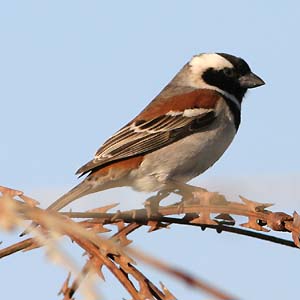


I'm finding that the more I'm willing to question the quiet (sometimes almost silent) assumptions I make about life, and humanity in particular, the more I simply notice the others who share the spaces I live in and move through. More and more often I don't seem to have to remind myself not to be sidetracked by the overwhelming humanness that surrounds me most of the time.
Imagine that this is what we did, that this is what we taught our children, that this is what we expected, kindly but firmly of each other--always and everywhere knowing where we are, knowing the value of place more, much more than the illusory value of time.
Friday, March 5, 2010
Vine Deloria Quotes Camus
Christianity, no doubt, was only able to conquer its catholicity by assimilating as much as it could of Greek thought. But when the Church dissipated its Mediterranean heritage, it placed the emphasis on history to the detriment of nature, caused the Gothic to triumph over the romance, and destroying a limit in itself, has made increasing claims to temporal power and historical dynamism. When nature ceases to be an object of contemplation and admiration, it can be nothing more than material for an action that aims at transforming it. These tendencies--and not the real strength of mediation, which would have compromised the real strength of Christianity--are triumphing, in modern times, to the detriment of Christianity itself, by inevitable turn of events. *If, as Camus would define it, the choice for this century was between history and nature, somehow we made a very bad bargain when we chose history because it appears history has come to an end. And we are very close to destroying nature.
- Vine Deloria, God is Red (Golden, Colorado: Fulcrum Publishing, 1994), 58
*Albert Camus, The Rebel (New York: Vintage Books, 1956), 299
Thursday, March 4, 2010
Who's Minding the Store?
How many of you...raise your hands...how many of you expect 'nature' to take care of the human problem on the planet (I'm assuming, of course, the you also think there is a human problem and know what I mean by that)? How many of you expect that something dramatic, which is beyond direct human-doing, is going to happen that will greatly disrupt the normalcy of life on the planet?
I ask because I'm wondering how prevalent this particular fantasy is. Is it emerging newly in our culture? Is it truly something different, or is it a variation on the salvation mythologem so prominent in this human culture? Is it possibly something in the genes that's coming forward, or something in the collective unconscious.
Collectively we're an odd occurrence. One of the primary memes in our culture is the fear of death; yet from the moment our ancestors set our feet on this path now coming to it's inevitable end, we have been slowly committing both our own and other living beings' lives to a juggernaut toward extinction. We embrace death as a beloved enemy.
So what meaning does it have that some part of some of us longs for 'nature's' intervention, even if it means that many, many of us will surely die?
I'm not sure I'm asking the right questions or asking these questions rightly, but I am sure there's something there.
I'd love to hear your thoughts on this.
I ask because I'm wondering how prevalent this particular fantasy is. Is it emerging newly in our culture? Is it truly something different, or is it a variation on the salvation mythologem so prominent in this human culture? Is it possibly something in the genes that's coming forward, or something in the collective unconscious.
Collectively we're an odd occurrence. One of the primary memes in our culture is the fear of death; yet from the moment our ancestors set our feet on this path now coming to it's inevitable end, we have been slowly committing both our own and other living beings' lives to a juggernaut toward extinction. We embrace death as a beloved enemy.
So what meaning does it have that some part of some of us longs for 'nature's' intervention, even if it means that many, many of us will surely die?
I'm not sure I'm asking the right questions or asking these questions rightly, but I am sure there's something there.
I'd love to hear your thoughts on this.
Monday, March 1, 2010
Exhibit Posters
Here are links to the 4 We Are Not Humanity exhibit posters:
These are quite large, so you'll need to reduce them in your reader to 17% to see them effectively.
These are quite large, so you'll need to reduce them in your reader to 17% to see them effectively.
Allen Lobby Exhibit Coming Down Today
To those of you who visited the exhibit of the last couple of months, my thanks. I certainly enjoyed the process of creating it and have enjoyed your presence via this blog. Someone was asking about the quotes poster. I will figure out a way to get all those quotes into the blog for you.
I will continue with my postings here until either I run out of interest in doing it or you all run out of interest in reading it.
As my friend Mark would say, More later....
I will continue with my postings here until either I run out of interest in doing it or you all run out of interest in reading it.
As my friend Mark would say, More later....
Subscribe to:
Posts (Atom)